
Your Workplace Could Be Organized
What a union drive actually looks like, which is less dramatic and more possible than the picket-line version in your head.
Lorenzo ScaturchioLos AngelesAbout the author →
ExploreMoney & workPower & institutions
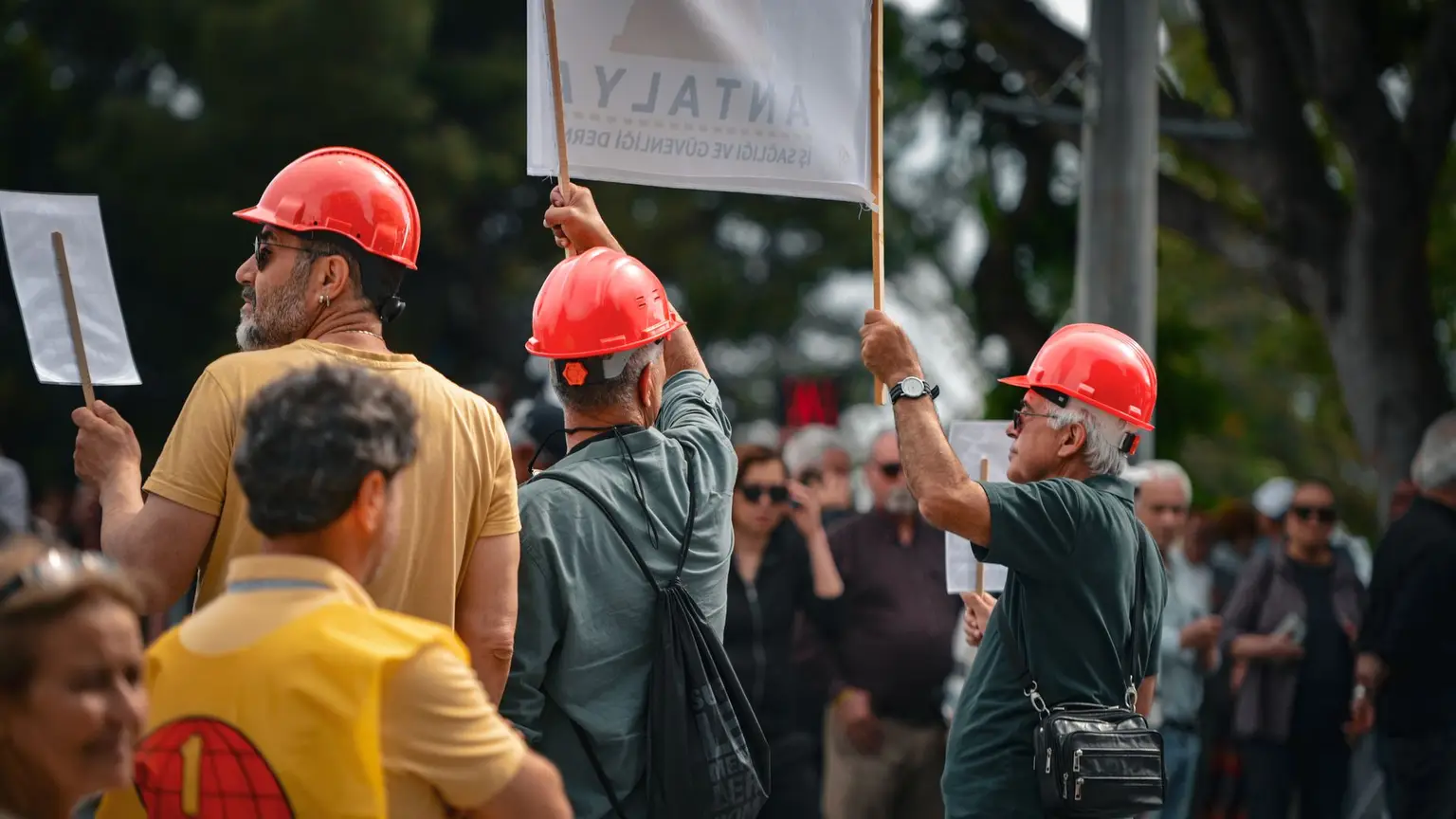
Mostly it's talking to people
Workplace organizing is boring. Not in a bad way. In the way that anything real and effective is boring: it's mostly just talking to people.
The movies show picket lines, dramatic speeches, confrontations with management. That stuff happens eventually, maybe. The actual work is conversations, one at a time, over weeks and months, about mundane things like scheduling and pay and whether the break room has enough chairs.
Your workplace could probably be organized. Most could. The barrier isn't legal, though the law is hostile, and it isn't structural either. It's that most people have never seen it done, so they assume it can't be.
What organizing actually looks like
Forget the fiery speeches and the radical politics. Organizing is about trust and relationships. It's finding out what people actually care about and connecting that to collective action.
It starts with mapping. Who works where, on what shifts, in what departments. Who talks to whom. Who trusts whom. This sounds clinical, but it's just paying attention to social dynamics that already exist.
Then come the one-on-one conversations. Not group meetings; those come later. Individual conversations where you ask questions and actually listen. What do you like about working here? What frustrates you? Have you ever thought about why things are the way they are?
Most people have never been asked these questions by someone who genuinely wants the answer. When they finally are, they have a lot to say.
You're not trying to convince anyone of anything yet — just to understand what people care about, and to start building relationships with the coworkers who might want to do something about it.
The committee
After enough conversations, after enough trust gets built, you form an organizing committee. A small group of workers committed to the effort, drawn from different parts of the workplace.
This committee becomes the core. They have more conversations. They map more relationships. They identify leaders, not the self-appointed kind, but the people others naturally look to and trust.
The process is iterative. You talk to people, learn what matters to them, figure out who else you should be talking to. You hit walls. You find unexpected allies. The person you assumed would be against this turns out to be furious about the same things you are.
And some people, sometimes people you thought were friends, will oppose it. That's hard. It's also data. You need to know where the resistance is.
The slow build
This is where most people get impatient. The process takes months, sometimes years, and there's no shortcut.
You need a supermajority. Not 50% plus one. You need 70%, 80%, sometimes more, because when management finds out, and they will, they launch a counter-campaign. Mandatory meetings. Promised improvements. Threatened consequences. They try to peel away anyone on the fence.
Go public with 55% support and you might end up with 45% after management responds. Go public with 80% and you might hold 70%. The margins are the whole game.
So you keep building. You keep having conversations and tracking where people stand, not in a creepy way, in a "we need to know if we have enough support" way. You address concerns, answer questions, wait.
Patience is a strategic asset.
What management does
They will find out. Maybe someone talks, maybe they notice the patterns, maybe they've been through this before and know the signs.
When they do, they respond predictably, because there's a whole industry of "union avoidance consultants" who teach them exactly what to do.
First, the mandatory meetings. Captive audience meetings, they're called: you're required to attend and listen to management explain why a union would be bad for you. These are legal, inexplicably. The union can't hold equivalent meetings on company time.
Then the promises. Suddenly management is very concerned about the break room chairs. Suddenly there's talk of raises and better scheduling and new policies. Funny how these things only become possible once workers start organizing.
Then the threats. Not explicit ones, that's illegal, though it doesn't always stop them. Vague warnings instead. How unions can be "adversarial," how strikes cost people money, how the company might have to "make difficult decisions" about staffing.
Then the delays. Legal challenges, petitions about the bargaining unit, appeals, anything to buy time and drain momentum.
None of this is surprising, and all of it can be prepared for. The key is making sure workers know it's coming before it arrives. When they hear the talking points, they should already know the script. "Oh, this is the part where they say the union just wants our dues." Inoculation turns propaganda into confirmation.
The vote
Eventually, if you've built enough support and survived the counter-campaign, there's a vote.
The NLRB, or its equivalent depending on your country, oversees it. Workers vote yes or no on union representation. If a majority votes yes, you have a union.
That's not the end. It's not even close. A union election means management is legally required to bargain with you. It doesn't mean they'll bargain in good faith, and they often won't. It doesn't mean you'll get a contract quickly, and you often won't. But it's leverage. It's legal recognition that you have the right to act collectively.
And it's terrifying for management, because now they have to deal with workers as a group instead of one at a time. The power dynamic has shifted.
Why it's possible
There's a widespread belief that organizing happens to other people. Factory workers, teachers, nurses. Not office workers or tech workers or retail workers. Not people like you.
That belief stopped being tenable in December 2021, when baristas at a Starbucks on Elmwood Avenue in Buffalo voted in the first union at a company-owned store in the chain's history — and hundreds of stores followed inside two years. Four months later, workers at Amazon's JFK8 warehouse on Staten Island won their election with an independent union run on donations, against a company that spent millions on avoidance consultants. Baristas and warehouse pickers, the two workforces everyone had written off as unorganizable.
Any group of workers can organize. There's no minimum company size and no specific industry requirement. If you work somewhere and you have coworkers, you can organize.
The real question is whether it's worth it, and that depends on what you want. Frustrated by arbitrary management decisions? Organizing gives you a voice in them. Worried about pay? It gives you collective bargaining power. Concerned about job security? It gives you protections against arbitrary termination.
None of these are guarantees. A union doesn't automatically fix everything. But it changes the dynamic. Management can't just do whatever it wants anymore. They have to negotiate, justify, and deal with workers who hold actual power.
The fear
The biggest obstacle to organizing isn't management, and it isn't the law. It's fear.
Fear of retaliation, of conflict, of failure, of being the person who "caused problems." These fears are rational. Retaliation happens, illegally, but it happens. Organizing does create conflict. It can fail, and you might end up exposed.
The fear is part of the system, though — workers being afraid to organize is precisely what lets management operate the way it does. The fear is doing the work of control.
The only way through it is to act despite it, together. That's what solidarity actually means. Not a slogan. A practice.
So
Your workplace could be organized. Probably not tomorrow, and probably not by you alone, but it's possible. It's been done in places far less likely than wherever you work.
The process is simple to describe. Talk to your coworkers. Find out what they care about. Build relationships. Slowly, carefully, construct the collective power that already exists in the room and hasn't been mobilized yet.
It's not dramatic, and it's not easy. Once you know it's possible, the only question left is whether you want to do it.
Enjoyed this?
An email when I publish something new. That is the whole list; I have never sent it for any other reason.
Get notified when I publish new articles. Unsubscribe anytime.