
Suburbs Are a Ponzi Scheme
Most American suburbs cannot pay for their own infrastructure. The math has never worked. We just kept building anyway.
Lorenzo ScaturchioLos AngelesAbout the author →
ExplorePlace & climateMoney & work
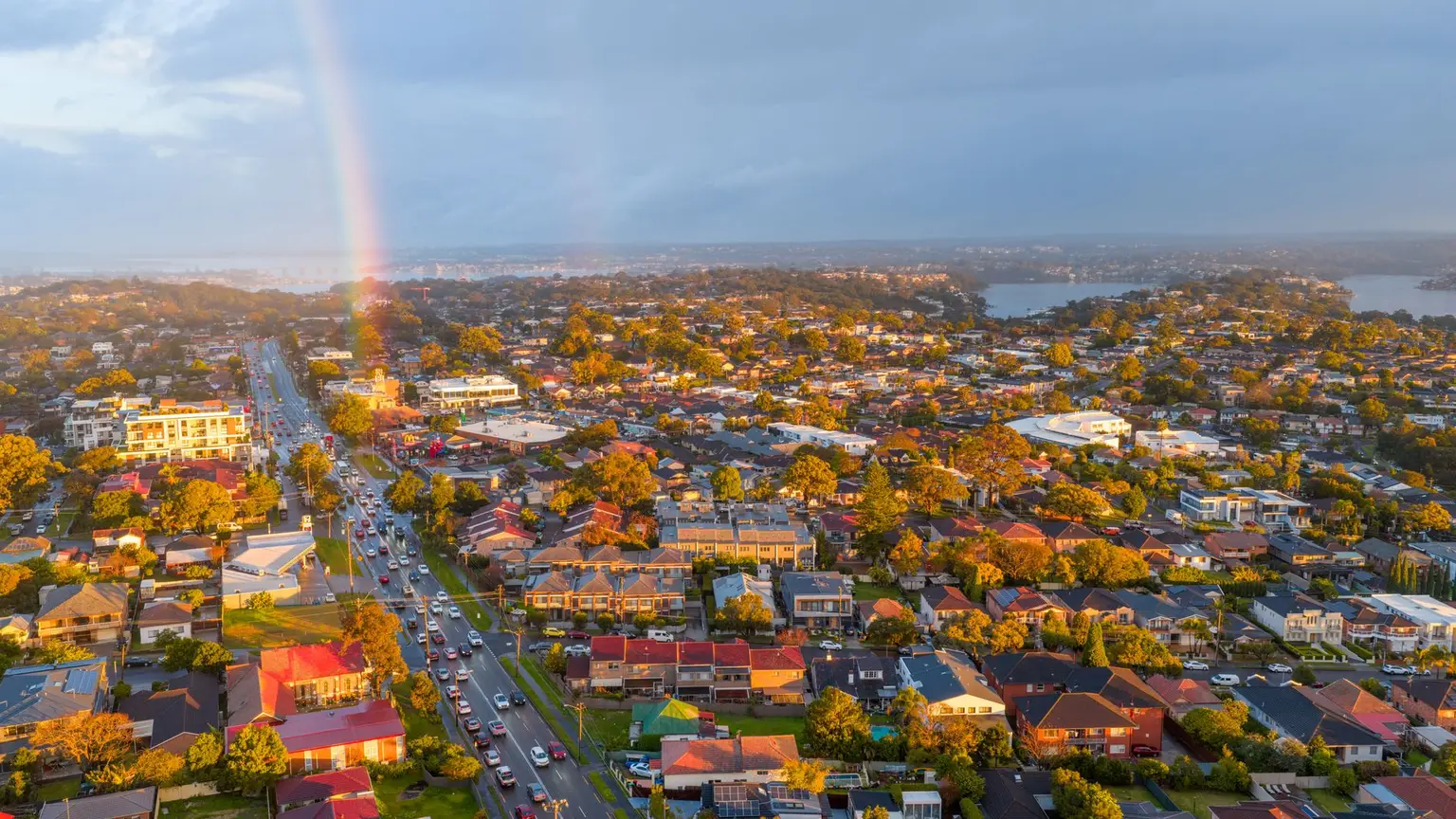
The development that doesn't pay for itself
A new subdivision opens on the edge of town. Two hundred homes, nice ones: three bedrooms, two-car garages, quarter-acre lots. The developer builds the roads, the sewers, the water lines. The city annexes the land and starts collecting property taxes. Everyone's happy.
For about twenty-five years.
Then the roads need repaving, the sewer lines need replacing, the water mains crack. And the city discovers something that should have been obvious from the start: the property taxes from two hundred single-family homes on large lots don't cover the cost of maintaining the infrastructure those homes require.
So the city does what it's always done and approves another subdivision. The new development brings in property tax revenue that covers the maintenance costs of the old development. Problem solved.
Until the new subdivision's infrastructure starts failing, and the city needs another subdivision to cover that gap. And another. And another.
This is a Ponzi scheme. Not metaphorically. Structurally.
The Strong Towns math
Charles Marohn, an engineer and planner who founded the organization Strong Towns, has been documenting this pattern for over a decade. His analysis is straightforward and devastating.
Take a typical suburban street. Calculate the property tax revenue it generates. Calculate the cost of building and maintaining the infrastructure that serves it (roads, water, sewer, stormwater, sidewalks if they exist, street lights, traffic signals). Amortize the infrastructure costs over its expected lifespan, and compare the two numbers.
In almost every case Marohn and his colleagues have studied, the infrastructure costs exceed the tax revenue, and not by a little. Suburban development patterns routinely generate only a fraction of the revenue needed to maintain the public infrastructure they require.
This isn't because property taxes are too low, though they often are. It's geometric. Spread-out development means more linear feet of road per household, more pipe per connection, more surface area to plow and patch and eventually rebuild. A quarter-acre lot can't generate enough tax revenue to fund its proportional share of infrastructure when that infrastructure is stretched across miles of low-density development.
Lafayette's confession
The most cited case study is Lafayette, Louisiana. In 2014, the city partnered with Urban3, a data analytics firm specializing in fiscal productivity, to map the relationship between land use and fiscal impact across the entire city.
The results were stark. Lafayette's poorest, most "blighted" downtown neighborhoods generated more tax revenue per acre than its wealthiest subdivisions, by a wide margin. The dense, walkable core, the part of town that planning departments typically try to "revitalize," was subsidizing the sprawling suburbs everyone assumed were the tax base.
The numbers were inescapable. A downtown block of modest buildings, mixed uses, and small lots generated roughly $26 per square foot in tax revenue. A typical suburban subdivision generated roughly $2 per square foot. The downtown paid for itself many times over; the suburb didn't come close.
And Lafayette isn't unusual. Every city that has run this analysis (and an increasing number are) finds essentially the same pattern. Dense development subsidizes sprawl. Traditional urban patterns are fiscally productive and suburban patterns are fiscally consumptive, and the money flows from the center to the periphery.
How the scam works
The mechanism is simple enough that it's embarrassing nobody talks about it more.
Phase one: The developer builds the subdivision. Roads, sewers, water lines. The developer pays for this, or more accurately the homebuyers pay through higher purchase prices. But the city now owns the infrastructure, and it's the city's responsibility to maintain and eventually replace.
Phase two: The city collects property taxes. For the first decade or two, the infrastructure is new and requires minimal maintenance, so the tax revenue looks like profit. The city feels flush and uses the apparent surplus to fund services, hire staff, and, critically, justify more development.
Phase three: The infrastructure ages. Roads crack, pipes corrode, systems built to last twenty-five to thirty years start failing. The city faces a maintenance bill that dwarfs the annual tax revenue from the properties that require it.
Phase four: To cover the gap, the city approves more development. New subdivisions on the periphery bring in new tax revenue, and the new revenue covers the old maintenance costs. Solvency is restored.
Phase five: The new infrastructure ages. Return to phase three.
This is literally how a Ponzi scheme works. You pay old investors with new investors' money, and it works as long as new money keeps flowing in. The moment growth stops, the whole thing collapses.
The growth trap
The political incentive structure makes this almost impossible to escape.
Elected officials operate on four-year cycles. A new subdivision generates immediate, visible benefits: new homes, new residents, new tax revenue. The maintenance costs won't come due for decades, and by the time the bill arrives, the officials who approved the development are long gone.
Meanwhile, saying no to development means saying no to jobs and housing and growth, the things every politician promises. The developer has a compelling pitch about investment and community expansion. The city engineer's objection that the long-term maintenance costs exceed the projected revenue is, shall we say, less politically compelling.
And the growth machine has institutional momentum. Planning departments are staffed to process development applications, not to evaluate lifecycle fiscal impacts. Economic development agencies exist to attract investment, chambers of commerce exist to promote growth, and the whole political ecosystem is organized around a single imperative to build more.
Nobody's institutional job is to ask whether the city can afford what it already has.
Density is the math that works
Traditional urban development, the kind that existed before car-dependent suburbia, pays for itself.
A block of rowhouses generates more tax revenue per acre than a subdivision of detached houses on large lots. An apartment building generates more than rowhouses, and mixed-use buildings with ground-floor retail generate the most of all. This is purely geometric: more taxable value per acre means more revenue per linear foot of infrastructure.
A traditional Main Street (two- and three-story buildings, shops on the ground floor, apartments above, built right up to the sidewalk) is a fiscal powerhouse. It generates enormous tax revenue relative to the minimal infrastructure it requires. The streets are short, the utility connections are dense, and the maintenance burden stays manageable.
A suburban collector road lined with big-box stores set back behind parking lots is a fiscal catastrophe. Enormous infrastructure footprint, minimal tax revenue per acre. The stores themselves generate almost no property tax relative to the land they consume, because surface parking lots are valued as unimproved land.
Walmart doesn't subsidize your suburb. Your suburb subsidizes Walmart.
Who pays
The distributional consequences are ugly.
Older, denser neighborhoods, often lower-income and often communities of color, generate surplus tax revenue that gets spent maintaining infrastructure in wealthier, newer suburbs. It's a straight wealth transfer from poor to rich, mediated through municipal budgets that nobody examines closely enough.
When the city can't cover the gap through growth, when the music stops, it has three options: raise taxes, cut services, or let infrastructure deteriorate. All three land hardest on the people who were already subsidizing the suburbs. Taxes go up for everyone. Services get cut in the neighborhoods with less political power. Deferred maintenance concentrates in the areas that were generating surplus rather than the areas consuming it.
This is how you get a city where downtown potholes go unrepaired while a suburban interchange gets a $50 million upgrade. The money flows outward. It always has.
The reckoning
American cities are sitting on infrastructure liabilities they cannot afford. The American Society of Civil Engineers estimates trillions in deferred maintenance nationwide, most of it suburban infrastructure built during the postwar boom that is now reaching the end of its useful life all at once.
The bill is coming due, and there aren't enough new subdivisions on the edge of town to cover it.
Some cities will go bankrupt. Some already have. Detroit's fiscal collapse had many causes, but the mismatch between sprawling infrastructure obligations and a shrinking tax base was central. Others will execute a slow decline: roads that don't get repaved, pipes that don't get replaced, services that quietly disappear.
The ones that survive will be the ones that figure out what the math has been saying all along, which is that density pays for itself and sprawl doesn't. That means investing in the neighborhoods that already generate surplus instead of extending pipe to the next quarter-acre lot.
Suburbs aren't a lifestyle preference. They're a financing mechanism, and the financing doesn't work.
Enjoyed this?
An email when I publish something new. That is the whole list; I have never sent it for any other reason.
Get notified when I publish new articles. Unsubscribe anytime.