
Strikes Work
Withholding labor is the most effective leverage workers have, which is exactly why so much effort goes into making strikes feel impossible.
Lorenzo ScaturchioLos AngelesAbout the author
ExploreMoney & workPower & institutions
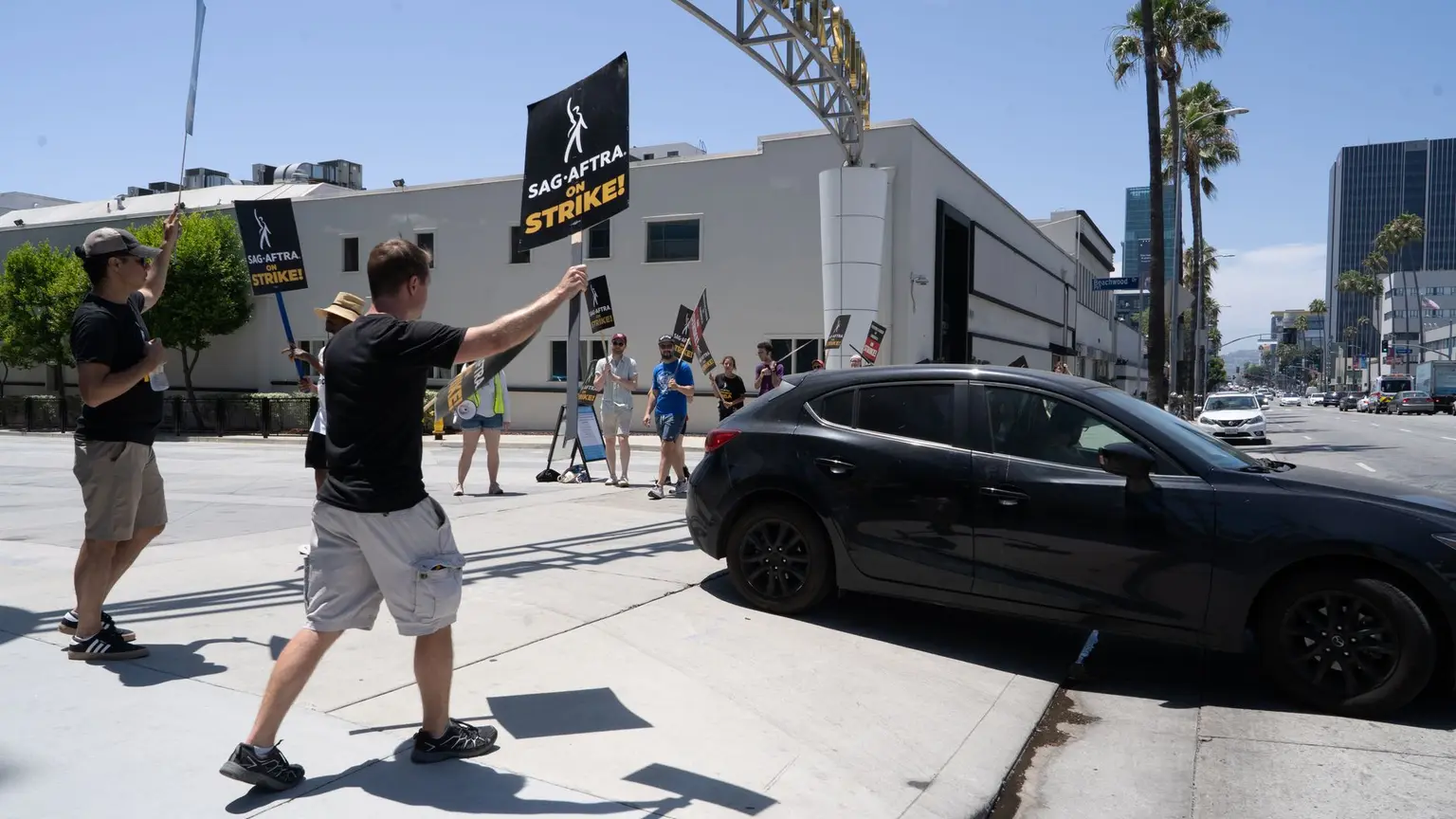
The question answers itself
People ask whether strikes still work, usually people who've never had to ask it seriously. Whether they're outdated. Whether there are better ways to negotiate.
Strikes work. They've always worked. That's precisely why so much effort goes into making them illegal, impractical, or unthinkable.
The basic math
Every business is a bet that labor shows up tomorrow. Capital doesn't produce anything on its own, machines don't operate themselves, and software doesn't write itself (not yet, anyway). Every dollar of profit, every quarterly earnings report, every executive bonus traces back to workers doing things.
When workers stop doing things, money stops flowing. Not in some abstract sense. Trucks stop moving, code stops shipping, customers stop getting served.
That's leverage, and not the kind you get from a sternly-worded email or an anonymous Glassdoor review. The kind that shows up on balance sheets.
Employers know this, and they've always known it. The entire history of labor relations is the history of trying to make strikes impossible, through laws and scabs and police and propaganda, and through the slow erosion of the idea that workers have collective power at all.
Why you think strikes don't work
If strikes are so effective, why does everyone treat them as a relic of the industrial age?
Because you've been told they are, relentlessly, for decades.
The decline of strikes in most Western countries isn't evidence that they stopped working. It's evidence that the campaign to suppress them worked. Union membership dropped. Right-to-work laws spread. The NLRA got interpreted into irrelevance, and striker replacement became standard practice. Most importantly, the culture shifted.
Workers got convinced that collective action was somehow unprofessional. That it was adversarial in a bad way, that good employees handle things individually, that unions are for factories and not offices, that knowledge workers are too sophisticated for that sort of thing.
The laws didn't change because strikes stopped being effective. They changed because strikes were too effective. You don't spend billions of dollars lobbying for anti-union legislation to stop something that doesn't work.
The mechanics of a strike
A strike is simple. Workers agree not to work until demands are met. That's it.
Simple doesn't mean easy. The hard part isn't the concept, it's the coordination: getting enough workers to agree, getting them to hold the line when the bills pile up, getting them to trust each other when management starts making individual offers, spreading rumors, threatening consequences.
The power of a strike comes from solidarity. One person refusing to work is insubordination. A hundred people refusing to work is a labor action. A thousand is a crisis for management.
Management knows exactly which number they're dealing with. They can survive losing a few people; they cannot survive losing everyone. Their entire strategy is to prevent the second scenario from ever occurring.
They'll offer bonuses to people who don't strike. They'll hire replacements, threaten to offshore or automate or downsize, drag out negotiations until the strike fund runs dry, get injunctions. They'll do anything except the one thing they don't want to do, which is meet the demands.
Because meeting the demands sets a precedent. It proves the model works, and it shows other workers what's possible.
Historical clarity
Look at any major improvement in working conditions over the past 150 years. The eight-hour day. The weekend. Child labor laws, workplace safety regulations, minimum wage, health insurance, paid leave.
None of these were gifts. None came from enlightened management deciding to do the right thing or from "market forces" working themselves out. They came from strikes, from workers refusing to work under intolerable conditions until those conditions changed.
The eight-hour day runs through Haymarket in 1886, where the campaign for it got men hanged. The UAW exists because workers occupied GM's plants in Flint for forty-four days across the winter of 1936–37 and did not leave until the company signed. Workers died for the eight-hour day. They were shot, beaten, imprisoned. Eventually they won.
Strikes also lose, and honesty requires saying so. Reagan fired more than 11,000 striking air traffic controllers in August 1981 and broke PATCO outright; organized labor spent the next two decades flinching from the example. The mechanism is leverage, not magic — it works when the workers are hard to replace and the coordination holds, and 1981 was a lesson in what happens when a president decides to test both at once.
This history gets sanitized. It gets turned into something vague and distant, something that happened before the modern economy and before we all became too civilized for that sort of thing. The mechanism hasn't changed. What changed is our willingness to use it.
The modern resurgence
Something shifted recently. West Virginia's teachers walked out in February 2018 — all fifty-five counties, nine school days, in a state where public-employee strikes are illegal — and won a 5% raise; Oklahoma and Arizona followed within months. The UAW's 2023 "stand-up" strike against all three Detroit automakers at once ended with general wage increases around 25% over the contract. Tech workers, supposedly the pampered elite of the modern economy, started talking seriously about collective action.
In each case management suddenly discovered it could afford things it had previously insisted were impossible.
The pandemic clarified something that had been obscured for decades. "Essential workers" is just another phrase for workers whose labor we absolutely cannot do without, and it turns out that describes most workers. The whole economy depends on people showing up and doing their jobs.
When people stop showing up, whether because of a virus or a picket line, the system grinds to a halt. That's the leverage.
Harder to organize is not the same as doesn't work
You'll hear objections. What about automation, globalization, the gig economy, AI?
These get presented as reasons strikes can't work anymore. They're really reasons strikes are harder to organize, which is a different thing.
Capital is mobile. Companies can sometimes move operations overseas, and technology can sometimes replace workers. But "sometimes" isn't "always," and the threat of these things is often more powerful than the reality. Companies can't offshore everything or automate everything, and even when they can, it takes time they don't have once the trucks stop moving and the servers go unattended.
The real question is whether workers believe they can organize a strike, and that belief is self-fulfilling. If workers think collective action is impossible, it is, because they won't try. If they think it's possible, it becomes possible, because they do.
The path forward
None of this is to say organizing is easy. The legal framework is hostile, the cultural headwinds are real, and the risks are significant.
But the mechanism works, and it's always worked. The only variable is whether enough workers, in enough places, decide to use it. That's starting to happen.
The strike is probably the most powerful tool workers have ever had. It got buried under decades of propaganda, legislation, and cultural conditioning, but it never stopped working. It just stopped being used.
Enjoyed this?
An email when I publish something new. That is the whole list; I have never sent it for any other reason.
Get notified when I publish new articles. Unsubscribe anytime.