
Rural America Isn't What You Think
The countryside isn't monolithically conservative. It's complicated, abandoned, and organizing in ways that defy stereotypes.
Lorenzo ScaturchioLos AngelesAbout the author →
ExplorePower & institutions
Beyond the stereotypes
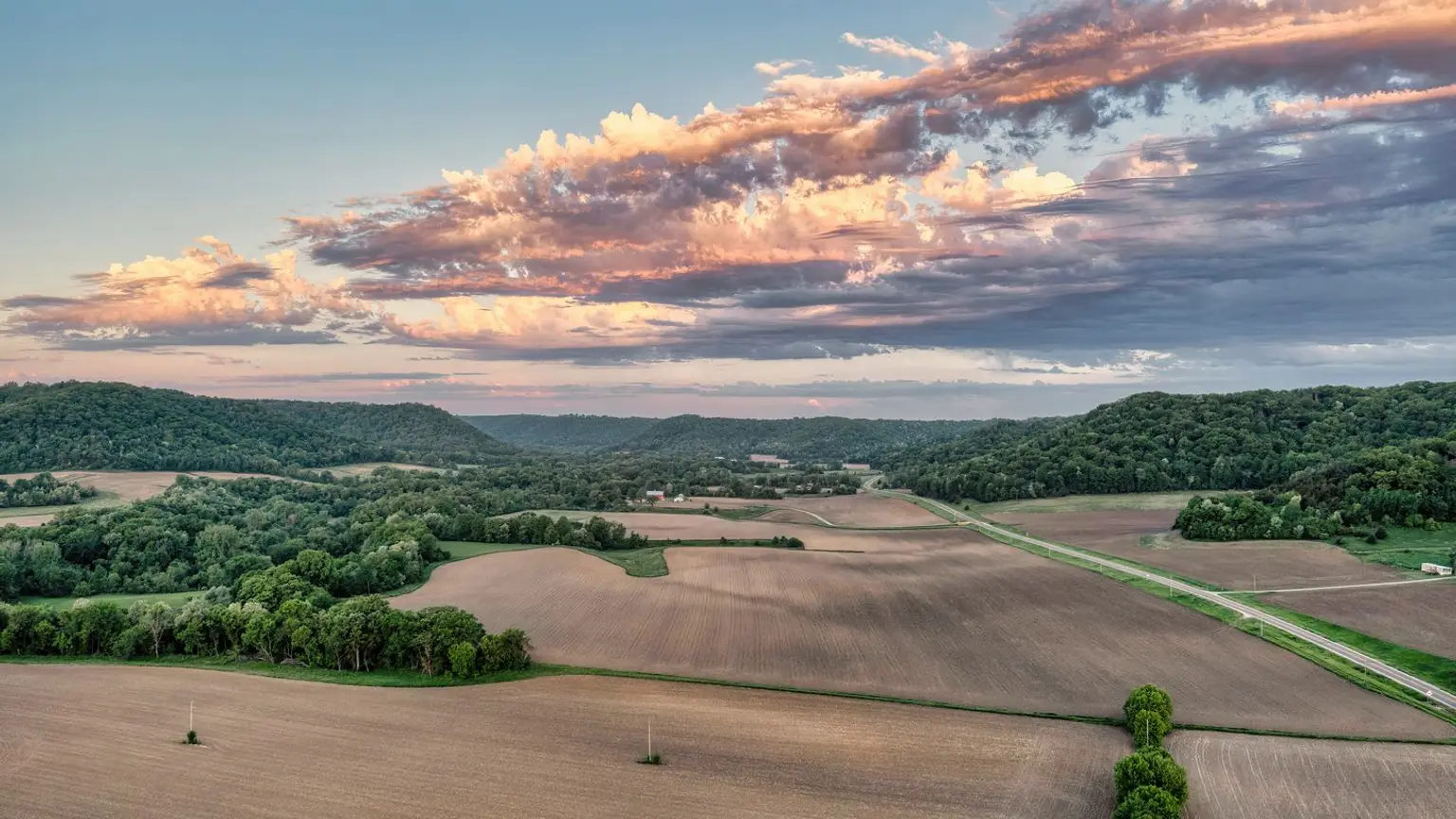
Drive through rural America and you'll see red signs, flags, bumper stickers announcing political allegiances. The message seems clear: this is conservative country, monolithically right-wing, culturally alien to urban progressives.
It's wrong. Not entirely wrong, since rural areas do vote heavily Republican in national elections, but wrong in ways that matter for understanding American politics and geography.
Rural America isn't a monolith. The stories we tell about it say more about urban assumptions than about the places themselves.
The abandonment
The political story can't be understood without the economic one, so start there. Rural America has been systematically abandoned for decades.
Hospitals close. Schools consolidate. Banks shutter branches and grocery stores disappear. The institutions that make a place livable get stripped out one by one, and the order they go in is rarely an accident.
This is the result of policy choices. Agricultural consolidation, encouraged by federal policy, destroyed family farms and the communities built around them. Trade agreements shipped manufacturing jobs overseas. Deregulation let corporations walk away from unprofitable markets, which in practice meant rural ones.
The people who stayed watched their towns hollow out, watched young people leave for cities where jobs existed, watched Main Street empty. And every four years politicians showed up to ask for their votes.
The political complexity
The urban-rural narrative misses how complicated rural politics actually is once you stop looking only at presidential returns.
Yes, rural areas vote Republican in presidential elections. But state and local races, ballot initiatives, the things that actually happen in rural communities, tell a different story. Rural voters consistently pass minimum wage increases, even in deep-red states. They vote for expanded Medicaid, for broadband, for infrastructure. On economic questions, rural Americans often sit to the left of the Democratic establishment.
The rightward shift in rural voting is recent. Many areas in the Midwest and Plains were strongholds of progressive populism within living memory. These places produced the movements that broke up monopolies, established worker protections, and wrote much of the social safety net.
That history didn't disappear. It went dormant.
What rural actually means
The category "rural" obscures more than it reveals. Rural Maine isn't rural Texas isn't rural Oregon isn't rural Alabama. Different histories, different economies, different demographics.
Some rural areas are predominantly white. Others have significant Black, Latino, or Indigenous populations. Some depend on agriculture, some on extraction (logging, mining, drilling), some on tourism, some on nothing much at all anymore.
The politics follow the differences. A county with a strong union history votes one way; a county without one votes another. Diverse populations vote differently than homogeneous ones, and a town an hour from a metro votes differently than one that's genuinely isolated. Treating "rural" as a single political category is like treating "urban" as one.
The organizing
Something gets almost no media coverage: people are organizing. Worker cooperatives are forming. Community land trusts are acquiring property. Mutual aid networks fill gaps left by departed institutions. Where telecom companies refused to lay broadband, cooperatives are building it themselves.
This is often political without being partisan. It's about building power at the local level, taking control of resources and institutions that were extracted or abandoned. Some of it is leftist, influenced by cooperative economics and Indigenous practice. Some is libertarian, focused on independence from distant authorities. Much of it doesn't sort onto the usual axis at all.
What it shares is a refusal of the narrative that rural places are doomed to decline.
The urban gaze
Urban progressives have a rural problem. They don't understand rural America, and worse, they don't think they need to.
The dominant urban narrative frames rural people as backward, bigoted, voting against their own interests. It assumes urban perspectives are simply correct and rural ones are deviations requiring explanation. It mistakes voting patterns for political views, and reads cultural difference as moral failure. And it alienates the exact allies a coalition would need, which is the part that should worry anyone who claims to want one.
Rural people know they're being looked down on. They can feel the contempt coming off metropolitan media and party establishments. That doesn't make them conservative. It makes them hostile to institutions that seem to despise them, which is not the same thing.
Solidarity across the divide requires actually respecting rural people and their concerns. Not performing respect. Having it.
The land question
Underneath rural politics is a question: who controls the land?
Rural areas hold most of America's natural resources and agricultural production. It's where the food and water and energy come from, and also where the extraction happens, where the costs of industrial civilization get pushed out of sight of the people who benefit from them.
But rural people increasingly don't control what happens to that land. Corporations, investment funds, and distant landlords own more of rural America every year, and decisions about land use get made in boardrooms running financial calculations that have nothing to do with whether a community survives.
That breeds resentment. It's also a basis for organizing that crosses the usual lines. Left and right can disagree about almost everything and still agree that the people who live in a place should have some say over what happens to it.
Beyond the binary
The urban-rural divide is real but overstated, and the categories we apply to it (liberal versus conservative, blue versus red) obscure more than they show.
Rural America contains multitudes. Deep conservatism and radical organizing. Xenophobia and immigrant communities building new lives. Extraction industries in one county and ecological restoration in the next. Despair and determination, often in the same person.
None of this is settled. What happens depends on whether rural communities can build power, and whether urban allies can manage to see them as partners rather than problems to be explained.
The countryside isn't going anywhere. The question is what it becomes.
Enjoyed this?
An email when I publish something new. That is the whole list; I have never sent it for any other reason.
Get notified when I publish new articles. Unsubscribe anytime.