
Right to Repair Is a Civil Right
You bought it but you don't own it. Repair restrictions aren't a consumer inconvenience; they're a property rights crisis.
Lorenzo ScaturchioLos AngelesAbout the author →
ExplorePower & institutionsMoney & workTechnology & attention
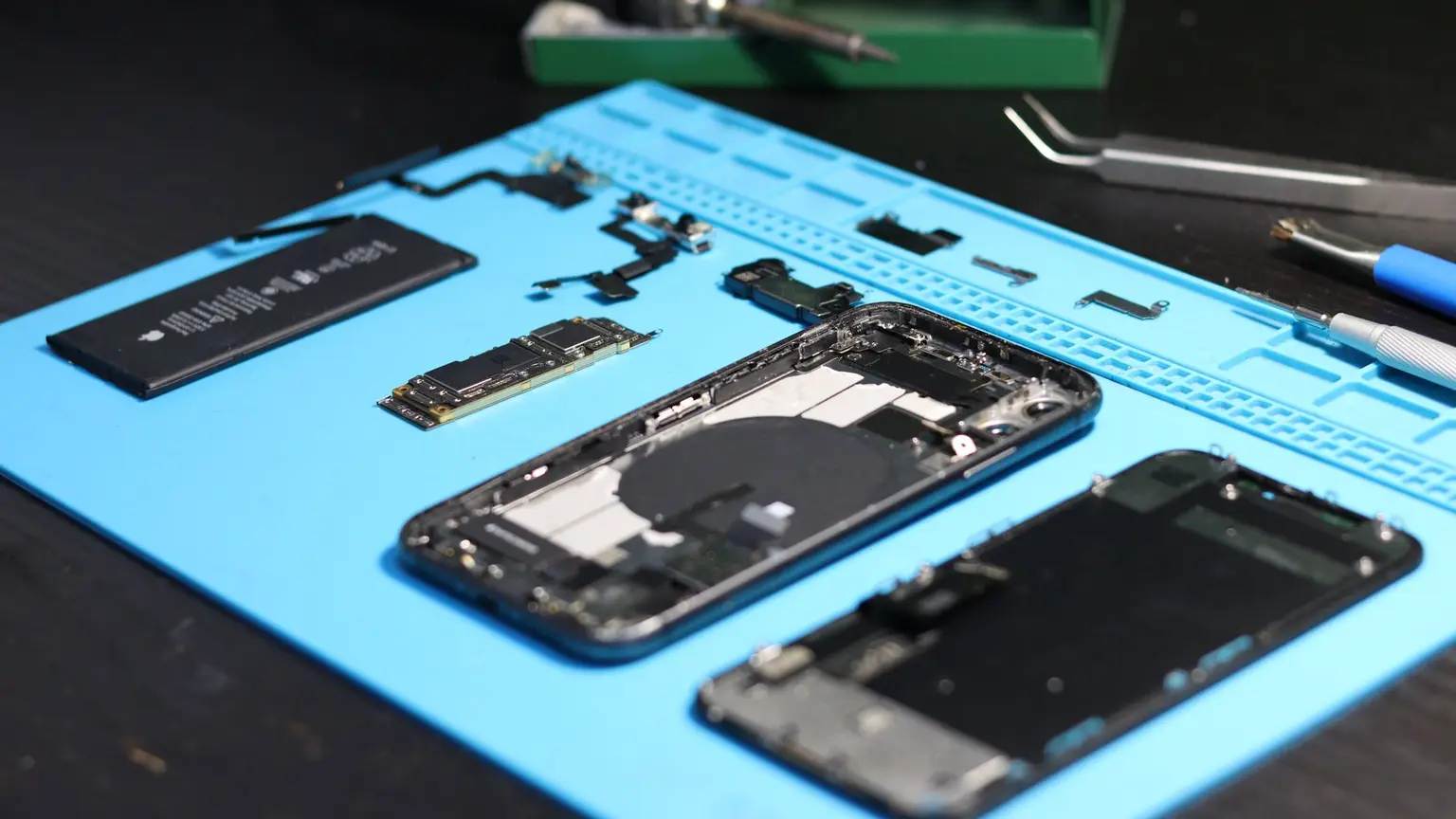
You don't own what you bought
You paid $1,200 for that iPhone. You own it. Except you can't replace the battery without Apple's blessing. Swap a cracked screen with an aftermarket part and the phone throws error messages at you. Try to move a working camera module from one identical iPhone to another and Apple's parts pairing system flags it as unauthorized and disables features.
This is what ownership looks like in 2026. You hold the object. A corporation holds the keys.
It isn't just phones.
The tractor that won't start
A farmer in Iowa buys a John Deere combine harvester for $500,000. During harvest season, the narrow window when every day matters, a sensor fails. The farmer could diagnose and fix the problem in an afternoon. They've been fixing equipment for decades. But John Deere's software locks prevent unauthorized repairs. The farmer has to wait for an authorized technician, who might be days away, while crops rot in the field.
This isn't hypothetical. The American Farm Bureau Federation has documented these delays extensively. Farmers have resorted to downloading pirated Ukrainian firmware to bypass Deere's software locks on their own equipment. American farmers pirating foreign software to use machines they paid half a million dollars for.
In 2015, the Copyright Office had to grant a specific DMCA exemption just so farmers could legally access the software on equipment they already owned. That the exemption was necessary at all tells you how broken the system is.
Follow the money
Why do manufacturers fight repair so hard? Because repair restrictions create a captive market.
Apple's out-of-warranty screen replacement costs $279-$379. An independent repair shop could do it for $80. Apple doesn't want you going to that shop. They want you either paying their price or, better yet, deciding the repair cost is close enough to an upgrade that you just buy a new phone.
The FTC's 2021 report, "Nixing the Fix," laid this out plainly. Manufacturers use a combination of design choices (proprietary screws, glued-in batteries), parts restrictions (refusing to sell components to independent shops), software locks (parts pairing that disables functionality), and legal threats (DMCA claims against anyone who reverse-engineers repair procedures) to funnel consumers into manufacturer-controlled repair channels.
This isn't a side effect of modern design. It's the business model.
Who gets hurt
This is where the civil rights framing matters. Repair restrictions don't hit everyone equally.
If you live in a major city, an Apple Store is probably within driving distance. In rural Montana, it isn't. If you can afford $379 for a screen repair, you pay and move on. On a fixed income, a broken phone might mean losing access to banking, healthcare portals, two-factor authentication for work, the digital infrastructure that basic participation now requires.
The FTC report found that repair restrictions "disproportionately affect communities of color and lower-income communities." Limit who can fix essential technology and you limit who can fully participate in modern life.
Medical equipment is maybe the starkest example. Hospitals, particularly rural ones operating on thin margins, need to keep ventilators, infusion pumps, and patient monitors running. Manufacturers increasingly restrict access to service manuals, diagnostic software, and replacement parts. During COVID the absurdity peaked: hospitals couldn't get timely repairs on ventilators because the manufacturer's authorized technicians were overwhelmed. iFixit stepped in to distribute repair documentation, and manufacturers still pushed back.
People's lives depended on these machines. The manufacturer's service agreement didn't care.
Massachusetts showed the way
In 2012, Massachusetts passed the first automotive right-to-repair law by ballot initiative. Voters approved it 86% to 14%. In 2020, the state expanded it to include telematics data, again by overwhelming margins.
The auto industry's response was telling. It spent $26 million trying to defeat the 2020 measure, running ads that claimed right-to-repair would help stalkers track victims through their cars. Voters saw through it.
The problem with state-by-state approaches is that manufacturers can comply nationally with the strictest state law, which they've largely done for automotive, or fight every new state bill one at a time, spending down local advocacy groups that can't match corporate lobbying budgets.
By 2025, over 40 states had introduced right-to-repair legislation. A handful passed meaningful bills. Most died in committee after manufacturer lobbying. The pattern is consistent: overwhelming public support, intense industry opposition, legislative inaction.
The ownership lie
Kyle Wiens, the CEO of iFixit, has been making this argument for over a decade: if you can't fix it, you don't own it.
He's right, but I'd go further. What we're watching is ownership itself getting redefined. You don't buy products anymore. You buy a license to use a physical object under conditions the manufacturer sets. Your tractor, your phone, your wheelchair, your hearing aid: all tethered to someone else's server and someone else's willingness to let you use what you paid for.
This is a subscription model wearing the costume of ownership. You pay full price for the object and get the rights of a renter.
The Copyright Office's triennial DMCA exemption process, where citizens petition the government for permission to tinker with things they own, is an admission that current law treats manufacturers' software interests as superior to owners' property rights. Every three years we ask for permission, and sometimes we get it. We're asking for something that should already be ours.
The environmental cost nobody mentions
Americans generate roughly 6.9 million tons of e-waste per year. The EPA estimates that only about 25% of it gets recycled. The rest goes to landfills or gets shipped to developing countries where it's processed under conditions that poison workers and contaminate soil and groundwater.
Every device thrown away because it's too expensive or too difficult to repair is a device that didn't need to become waste. Repair is the most effective form of recycling: it keeps the product in use, preserving all the energy and materials that went into making it. A repaired phone produces zero additional manufacturing emissions. A new one requires mining rare earth minerals, often under exploitative conditions in the DRC or China.
So right-to-repair is also an environmental issue. Manufacturers have figured out that making repair difficult increases sales of new units, and they've decided that's an acceptable trade-off. The planet's material limits suggest otherwise.
What ownership should mean
The right to repair your own property used to be so obvious it didn't need a name. Your grandparents fixed their own appliances and cars, not because they were unusually handy, but because manufacturers built things to be fixed, sold parts to anyone, and published service manuals.
We didn't lose this by accident. We lost it because companies realized that controlling the aftermarket was more profitable than selling durable goods. Every locked-down device is a deliberate choice to put recurring revenue ahead of the owner's autonomy.
Right-to-repair legislation isn't asking for anything radical. Access to parts, tools, and documentation at fair prices. Software locks that don't stop owners from servicing their own property. What we had fifty years ago, before the lawyers and the DRM got involved.
Ownership without the right to repair is a long-term lease with a purchase price, and we should stop pretending otherwise.
Enjoyed this?
An email when I publish something new. That is the whole list; I have never sent it for any other reason.
Get notified when I publish new articles. Unsubscribe anytime.