Rent-Seeking Is Eating Everything
Most wealth in America is not created but extracted, and the economy is increasingly about controlling gates rather than building roads.
Lorenzo ScaturchioLos AngelesAbout the author →
ExplorePower & institutionsMoney & work
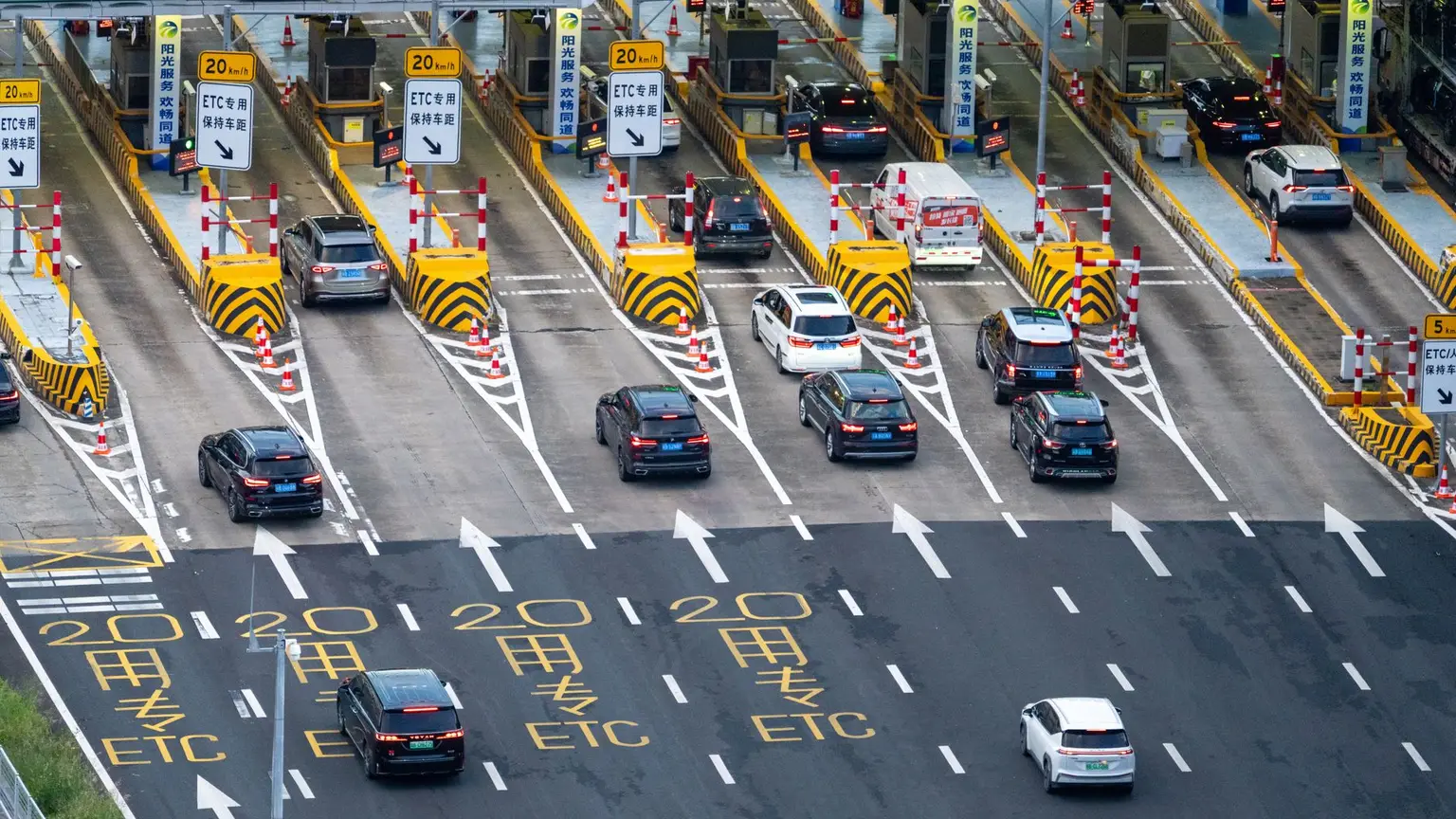
You're paying tolls on roads you already built
There are two ways to make money. You can create value: build something, grow it, invent it, provide a service that makes someone's life better. Or you can extract value: position yourself between people and something they need, and charge for access.
Economists call the second one rent-seeking. The term doesn't just mean charging rent on apartments, though that's part of it. It means any income derived from controlling access rather than producing value. And it's eating the American economy alive.
The landlord who bought a house in 2012, did nothing to it, and sells it for triple the price in 2025 didn't create triple the value. The neighborhood got better, the city grew, interest rates shifted. The landlord captured appreciation generated by other people's work and public investment. That's rent-seeking.
The pharmaceutical company that buys a generic drug, raises the price 5,000%, and spends more on lobbying than R&D didn't innovate. It acquired a monopoly position and exploited it. That's rent-seeking.
The ticket platform that charges $75 in "fees" on a $100 concert ticket, while operating as the sole authorized seller because it also owns the venue, isn't competing in a market. It is the market. That's rent-seeking.
This isn't an edge case. It's becoming the default business model of American capitalism.
The housing racket
Start with real estate, because that's where most Americans encounter rent-seeking directly.
Between 2012 and 2024, U.S. median home prices roughly doubled. Homes didn't get twice as good, and construction costs didn't double. Land values inflated because of speculation, supply constrained by zoning laws that existing homeowners wrote, and the financialization of housing as an asset class.
Institutional investors now own significant portions of single-family rental housing in many American cities. Invitation Homes, a company spun out of Blackstone's post-2008 buying spree, owns roughly 80,000 single-family homes. They didn't build those homes. They bought them in bulk when people were losing them during the foreclosure crisis, then rented them back to the same demographic that got foreclosed on.
This is value extraction with a business plan. The asset already existed. So did the demand. The profit comes entirely from controlling access to a necessity.
And it scales. Private equity firms have moved into mobile home parks, buying the land under people's trailers and jacking up lot rents because residents can't afford to move a manufactured home. They've moved into student housing and senior housing. Anywhere people are captive, where they can't easily walk away, becomes a target.
The insulin example
You probably know this story, but it bears repeating because it's so clean.
Frederick Banting and Charles Best discovered insulin in 1921. Banting sold the patent to the University of Toronto for $1, saying: "Insulin does not belong to me. It belongs to the world." The three companies that now dominate the global insulin market (Eli Lilly, Novo Nordisk, and Sanofi) have made incremental modifications to the molecule over decades, each time extending patent protection and raising prices.
In 1999, a vial of Humalog (Eli Lilly's insulin analog) cost about $21. By 2019, it cost over $275. The drug didn't get 13 times more effective, and the manufacturing process didn't get 13 times more expensive. The companies controlling the patent learned, year by year, how much they could charge people who would die without their product.
After enormous public pressure, Eli Lilly capped its insulin at $35 per vial in 2023. They could afford to because the previous prices were never based on cost. They were based on leverage.
This pattern, acquire monopoly control over something people need and then extract maximum payment, repeats across the pharmaceutical industry. Dean Baker, the economist at the Center for Economic and Policy Research, estimates that patent and regulatory monopolies in the sector cost Americans roughly $400 billion annually above what drugs would cost in a competitive market. That's $400 billion in pure rent.
Monopoly power everywhere
Thomas Philippon's The Great Reversal documents something that should alarm anyone who believes in free markets: the American economy has become dramatically less competitive over the past forty years. Market concentration has increased in over 75% of U.S. industries. Corporate profit margins have risen to historic highs. Prices in concentrated industries are higher than in comparable markets abroad.
The mechanisms vary: patents, regulatory capture where companies write the rules that govern their own industries, network effects that create natural monopolies, plain mergers. The number of publicly traded companies in the U.S. fell from about 7,300 in 1996 to roughly 4,000 by 2023. Fewer companies, less competition, higher prices, more rent.
Look at any industry where Americans feel squeezed and you'll find concentration.
Airlines. Four carriers control roughly 80% of domestic capacity. Baggage fees, change fees, seat selection fees: these aren't innovations. They're what happens when you can't switch providers.
Telecom. Most Americans have one or two realistic choices for broadband, at prices among the highest in the developed world, for middling speeds and famously terrible customer service. None of which matters when your customers can't leave.
Healthcare. Hospital consolidation has accelerated for decades. When one system controls most of the beds in a region, it can charge insurers, and therefore patients, whatever it wants. A 2019 study by Zack Cooper and colleagues at Yale found that hospital mergers led to average price increases of over 20%, with no improvement in quality.
Live entertainment. Live Nation and Ticketmaster merged in 2010. They now control the majority of major concert venues, the ticketing platform, and artist management. The DOJ finally filed an antitrust suit in 2024. For fourteen years, concertgoers subsidized a monopoly because regulators let it happen.
What rent-seeking does to an economy
When profit comes from owning the gate instead of building the road, the incentives of the entire economy shift.
Smart people stop building things and start acquiring positions. Why invest in risky, capital-intensive production when you can buy an existing monopoly and raise prices, or fund research when you can buy patents and sue competitors, or compete at all when you can lobby for regulations that lock out new entrants?
This is measurable. The share of U.S. GDP going to corporate profits has risen steadily since the 1980s, while the share going to labor has declined. Investment in productive capacity (factories, equipment, infrastructure) has not kept pace with profits. Where's the money going? Stock buybacks, dividends, executive compensation, acquisitions. The economy generates enormous wealth. It just doesn't generate it by making things.
Baker's book Rigged lays out the argument in detail: the rules of the economy (patent law, copyright law, financial regulation, trade policy, corporate governance) are designed to direct income upward. This isn't a market outcome. It's a policy outcome. Markets don't concentrate on their own; they concentrate when regulators allow the mergers, extend the patent terms, and let lobbyists write the rules.
What would change
Imagine an economy where you couldn't make money by simply owning things other people need. Where patents lasted five years instead of twenty, housing was treated as shelter rather than an asset class, hospitals competed on quality instead of consolidating for pricing power, and you could buy a concert ticket from somebody other than the venue owner's subsidiary.
This economy would generate less total profit. The profit it did generate would flow more to people who build, teach, heal, grow, and maintain, and less to people who own the toll booths.
That's not a utopian fantasy. It's roughly what the American economy looked like in the 1950s and 1960s, when antitrust enforcement was aggressive, financial regulation was tight, and housing was still primarily a place to live. Those decades weren't perfect. They were less extractive, and the economy worked better for more people.
We don't have a production problem or an innovation problem. We have a gatekeeping problem, and until we name it clearly we'll keep designing solutions that miss the diagnosis. Rent-seeking. Extraction. The conversion of necessity into profit.
The economy doesn't need more growth. It needs fewer toll booths.
Enjoyed this?
An email when I publish something new. That is the whole list; I have never sent it for any other reason.
Get notified when I publish new articles. Unsubscribe anytime.