
The Myth of the Neutral Tool
Technology embeds politics, and the design is the argument. No tool is a mere instrument; every one shapes what's possible and what's thinkable.
Lorenzo ScaturchioLos AngelesAbout the author →
ExploreTechnology & attentionPower & institutionsPhilosophy & the self
The comfortable lie
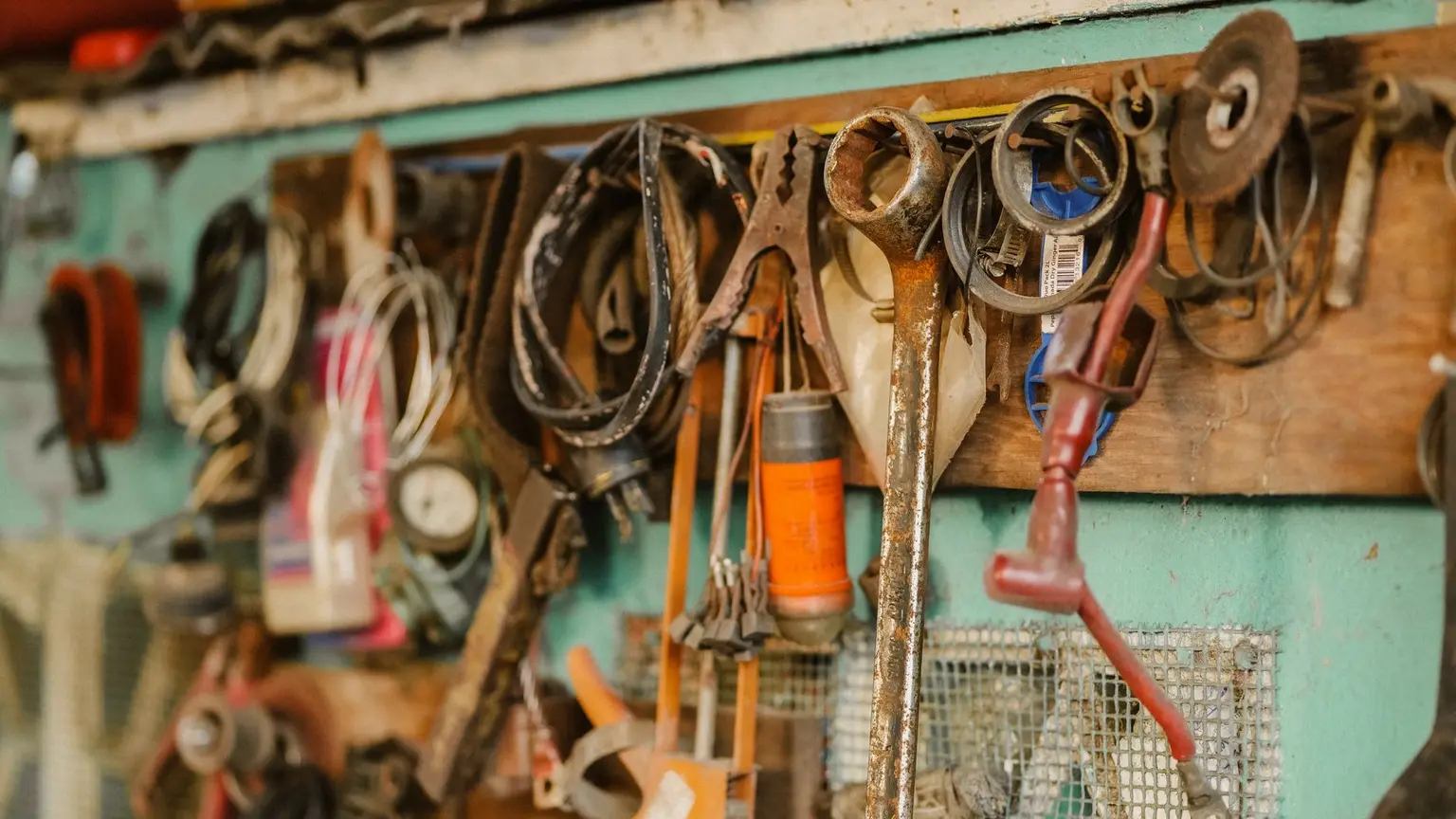
"Technology is neutral. It's just a tool. What matters is how you use it."
You hear it in boardrooms, in classrooms, in policy debates. It's convenient. It absolves designers of responsibility and turns hard questions about power into a matter of individual choice. It's also wrong.
A highway embeds assumptions about car ownership, suburban sprawl, and the value of speed over the neighborhood it cuts through. A social media feed embeds assumptions about what deserves attention and how human relationships should be shaped. An algorithm carries whatever values its creators poured into it, whether they meant to or not. None of these are neutral. They never were.
The myth survives because it's useful. It lets you skip the difficult conversation about who benefits and who loses when a technology gets deployed. It lets a technical decision pass for something other than a political one. It maintains the fiction that engineers are just engineers, rather than people making choices that shape how everyone else lives.
The politics of design
Every design decision is a political decision. Not party politics. Politics in the older sense: how power gets distributed, who gets access to what, whose interests sit at the center and whose get left at the edge.
Consider the automobile. Pure transportation technology, you'd think, just getting people from A to B. But the car as actually designed and deployed embedded specific politics. It required enormous public investment in roads. It enabled suburban sprawl that segregated communities by race and class, created a dependency on petroleum with everything that follows from that, and made streets dangerous for anyone not in a car while treating that danger as normal.
None of it was inevitable. Prioritize transit instead, build denser cities, design for the person on foot rather than the person behind the wheel, and you get a different outcome. The technology could have gone many directions. The one it went reflected who had power and what they valued.
Digital technology is no different. Every platform, every protocol, every interface embeds assumptions about how the world should work.
Algorithms as ideology
Algorithmic systems make this clearer, and easier to hide.
When a platform decides what to show users, it makes value judgments. What counts as "engaging"? Which behaviors earn visibility? What speech gets amplified, what gets buried, what gets removed? These look like neutral technical questions. They're political questions wearing technical language.
An algorithm tuned for engagement promotes content that triggers strong reactions, usually outrage or fear. Not because the engineers are evil but because that's what the target produces. The technical choice (optimize for engagement) carries a political one (attention matters more than social cohesion or truth).
Users never see how the choice gets made. The algorithm is a black box, and its assumptions arrive already naturalized, turned into "just how things work." That's how ideology tends to operate. It works best when it doesn't look like ideology at all.
The designer's intentions don't matter
Defenders of neutrality make their stand on intent. Surely a technology is neutral if its creators didn't mean any harm?
But technologies have effects regardless of what anyone intended. They open some possibilities and close others, empower some groups at the expense of others, and shape behavior long after the original designers have moved on. The people who built the early social networks probably didn't set out to make outrage machines that would corrode democracies. That's what happened anyway. The metrics they optimized for, the feedback loops they wired up, the attention models they borrowed, all of it produced outcomes that had nothing to do with what they wanted.
This isn't a gotcha. It's how technology works. Build something millions of people use and the consequences become systemic. You've made an environment, and environments have architectures that tilt some outcomes toward likely and others toward rare.
Resistance through design
If technology embeds politics, then designing it is a political act, and technologists are political actors whether they want the role or not. That changes what responsibility means.
Under the neutrality myth, engineers are craftspeople. They build what they're told. Social impact belongs to someone else: ethicists, regulators, the users. The job is technical excellence, not judgment. Drop the myth and that division of labor falls apart. Building a feature a certain way takes a position. Declining to think about the consequences is also a position, one that puts something else ahead of the people your work will touch.
I build software for a living, and the choice is real even when it's invisible. Some technologists make it deliberately, aiming to spread power rather than gather it: end-to-end encryption, decentralized protocols, open standards. These aren't only technical preferences. They're commitments written into the technology.
Others understand it just as well and prefer to pretend otherwise. It's easier. Less responsibility, and less friction with employers and investors who have their own preferences and like engineers who don't ask inconvenient questions.
The question of alternatives
"Okay, so technology isn't neutral. Now what?"
Start by dropping the frame that technical and political questions live in separate rooms. They don't. Every conversation about how to build something is also a conversation about how power gets distributed and which values end up baked into the systems people depend on.
Then ask different questions of the work. Not only "what's technically possible" or "what's most efficient" but "who does this serve?" And when the answer is that users will engage: engage with what, and what does that train them to do?
And demand that the systems shaping public life be accountable to that life. The algorithms that decide what information people see, what prices they pay, what opportunities reach them, shouldn't be trade secrets immune to scrutiny. Where the dominant tools concentrate control, alternatives built on other assumptions already exist, often made by people working without corporate resources, precisely because they understand that design is politics.
The stakes of clarity
The myth of neutrality is itself doing political work. When people believe technology is neutral, they stop interrogating its design. They take whatever gets built as inevitable rather than chosen, blame individuals for outcomes that systems produce, and defer to technologists as neutral experts instead of actors with interests and blind spots. The myth serves power by making political choices look like technical necessities, and it gives cover to building whatever is profitable while treating impact as someone else's department.
Dropping the myth doesn't fix any of that on its own. Power, resources, and political will are still in the way. It only changes the terms: the conversation finally happens honestly, with the politics on the table instead of hidden inside the build.
So the next time someone tells you a tool is just a tool, ask them whose hand it was shaped to fit. The answer is usually written right into the design, if you're willing to read it.
Enjoyed this?
An email when I publish something new. That is the whole list; I have never sent it for any other reason.
Get notified when I publish new articles. Unsubscribe anytime.