Public Libraries Are Radical
If someone proposed the public library today, free and open to everyone with no purchase required, they would be called a socialist.
Lorenzo ScaturchioLos AngelesAbout the author →
ExplorePower & institutions
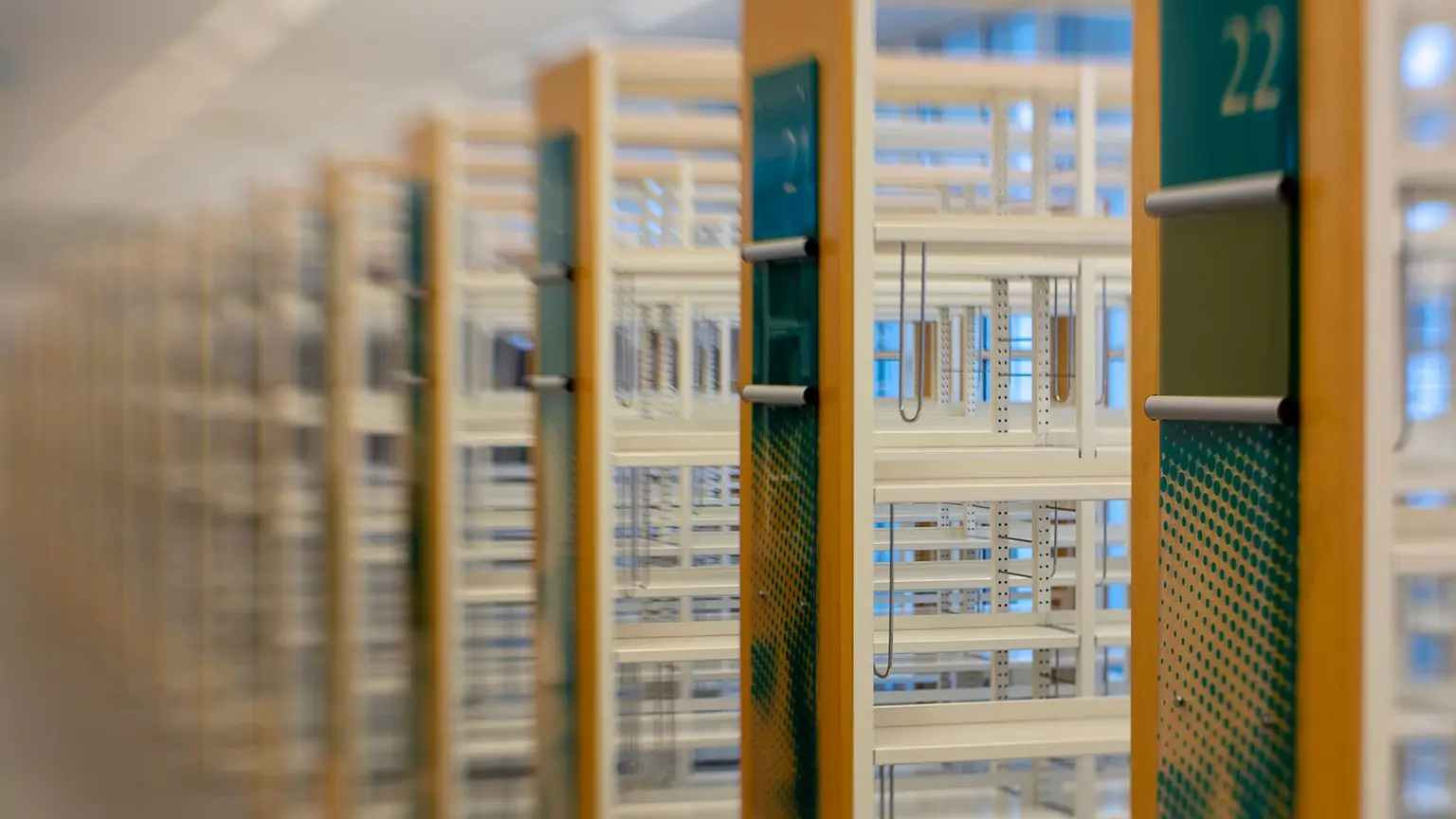
Imagine proposing this
Pitch the following to a city council in 2026: we're going to construct a building in every neighborhood. Climate-controlled, open to everyone, no membership fee, no purchase required. Anyone can walk in off the street (a CEO, an unhoused person, a kid skipping school, a retiree with nowhere else to go) and use the same resources: books, computers, internet, databases, meeting rooms, quiet spaces. We'll staff it with professionals who hold master's degrees and pay them to help anyone who asks, for free, with no judgment about what they want to know or why.
You'd be laughed out of the room, or called a communist. Probably both.
And yet the institution already exists. It's the public library — roughly 17,000 of them in the United States, so familiar that the radicalism has gone invisible.
What libraries actually are
A public library is the last truly public space in most American communities. A mall is public until you stop spending money or start making someone uncomfortable. A library is public in the older sense: your right to be there doesn't depend on your ability to pay.
Eric Klinenberg, the sociologist at NYU, calls libraries social infrastructure, the physical spaces that shape patterns of social interaction. In Palaces for the People he argues that where social infrastructure is strong, communities are more resilient, connected, and democratic, and that where it deteriorates, isolation and distrust fill the gap.
Libraries are the densest form of social infrastructure we have. A single branch can function as a community center, a study hall, a job training site, a warming shelter, an internet access point, a meeting space for civic organizations, a literacy program, a children's program, an archive, and a reference desk, simultaneously. No other public institution provides this range of services to this breadth of population at this low a cost. The New York Public Library system serves over 30 million visitors a year across its 92 branches, and the operating cost works out to about $20 per resident per year.
The Carnegie contradiction
The history of American public libraries is inseparable from Andrew Carnegie, which means it's inseparable from contradiction.
Carnegie funded the construction of over 1,600 libraries in the United States between 1883 and 1929. His philanthropy was genuine and his motives were complicated. He was a self-educated immigrant who attributed his success partly to a private library that let him borrow books as a young man in Pittsburgh, and he believed access to information could lift people out of poverty the way it had (in his telling) lifted him.
But Carnegie's fortune came from steel, and steel ran on the exploitation of immigrant labor in conditions that killed and maimed workers routinely. The Homestead Strike of 1892, in which Pinkerton agents hired by Carnegie's company opened fire on striking workers and killed seven, happened while Carnegie was donating libraries across the country.
The contradiction is structural, a feature of how public goods get created in a system built on private wealth. The library as we know it was funded by profits extracted from the people it was ostensibly meant to serve — the gift and the exploitation came from the same source. The libraries were still worth building. But the model, public institutions conjured by the philanthropy of the wealthy, is unstable: what one robber baron builds, the next generation's austerity politics can defund. A public good funded by private whim is a gift, and gifts can be revoked.
The quiet transformation
Walk into a public library in 2026 and you'll find something that looks very little like the book repository of popular imagination.
Many libraries now have social workers on staff, because libraries are where people in crisis show up. Someone experiencing homelessness needs a warm place to sit. Someone navigating the bureaucracy of public assistance needs an internet connection and help filling out the forms, and the person at the reference desk is who's there to give it. Libraries absorbed these functions because no one else would; the defunding of mental health facilities, public housing programs, and community centers pushed vulnerable populations toward the few remaining public spaces.
Denver Public Library hired a full-time social worker in 2015. The San Francisco Public Library followed, and dozens of library systems across the country now employ social workers, peer counselors, and outreach specialists. Some stock Narcan, some provide laundry facilities, and a few run needle exchange programs out of mobile library vans.
Is this what libraries are "supposed" to do? If your definition of a library begins and ends with books, no. But a public institution committed to serving its whole community ends up serving the people every other institution has abandoned. The work showed up at the door. The libraries let it in.
Under siege
Given what libraries represent, it should surprise no one that they're under attack.
Book banning attempts in the United States reached their highest level in decades in 2022 and 2023, according to the American Library Association, and most challenges target books dealing with race, gender identity, and sexuality. Whatever the challenges say about literary quality, the pattern underneath is plain: these are books that some people would prefer certain populations not read.
Funding is the slower, quieter attack. Public library funding in the U.S. has been essentially flat in inflation-adjusted terms for over a decade, even as demand for services has increased. In rural areas, branch closures are accelerating. In cities, deferred maintenance has left many library buildings in poor condition, and some systems have cut hours, reduced staff, or eliminated programs.
This is how you destroy a public institution without appearing to. You don't shut it down. You starve it until it can't function properly, then point to the dysfunction as evidence that it should be cut further. Public schools and the postal service have been through the same playbook; transit is in it now.
Why this matters
The public library is a working example of a principle that most of American public life has abandoned: that some things should be available to everyone regardless of ability to pay.
We don't talk about libraries this way because they're grandfathered in, established before the current orthodoxy that everything valuable should be marketized. Try to create them from scratch today and you'd face every objection that gets leveled at public investment. Why should taxpayers subsidize people who can afford to buy their own books? Isn't there a market solution? Won't people abuse the system?
Libraries already answered these objections. Taxpayers do subsidize them, and the return is extraordinary. There isn't a market substitute; nothing else provides this combination of services at this scale for this cost. And some people do "abuse" the system, in the sense that they use the library as a shelter or a bathroom — whether that counts as abuse or as a public institution meeting its most basic obligation depends on what you think public means.
Nearly every other shared space has been privatized or means-tested or enclosed. The library is still there, still free, still open to whoever walks through the door. Nobody is going to propose 17,000 free buildings to a city council in this century, so if it goes, it's gone. And it goes quietly — a branch closure here, a shortened Saturday there, slow enough to miss until the door you counted on doesn't open.
Enjoyed this?
An email when I publish something new. That is the whole list; I have never sent it for any other reason.
Get notified when I publish new articles. Unsubscribe anytime.