Journalism Is Dead, Long Live Journalism
The business model that paid for newspapers collapsed, but the practice of reporting is harder to kill than the institution that housed it.
Lorenzo ScaturchioLos AngelesAbout the author →
ExplorePower & institutions
The obituary everyone saw coming
The newspaper is dead. This isn't controversial anymore; it's arithmetic. Print advertising revenue collapsed by 80% in two decades. Newsrooms shed half their staff, and local papers vanished entirely from hundreds of communities. The institution that defined professional journalism for over a century is functionally gone.
That isn't the same as a tragedy, though, and it isn't quite a relief either.
The mourning confuses two different things: an industry and a practice. The industry, with its ad-subsidized business model and its professional class of credentialed reporters, is what died. The practice of investigating, documenting, and explaining events of public importance is harder to kill.
What the industry actually was
The golden age of journalism was an accident.
The newspaper business model worked because of a quirk in advertising economics. Newspapers bundled classified ads, display ads, and news content together. Readers came for any of these (job listings, car sales, local news) and advertisers paid for access to those eyeballs. The journalism was subsidized by people selling used furniture.
This wasn't a noble arrangement designed to serve democracy. It was a business, a profitable one, and for a while that profit happened to fund serious reporting.
When the internet unbundled everything (Craigslist ate classifieds, Google ate display ads) the subsidy disappeared. The journalism had never been paying for itself. It had been riding along on other revenue streams, and once those dried up, so did the newsrooms.
The myth of objectivity
The professional journalism that emerged from this model came with its own ideology. Objectivity, balance, the view from nowhere.
This was partly a marketing strategy. Newspapers needed broad audiences to maximize advertising reach, and taking strong editorial positions alienated readers and their eyeballs. So "objective" reporting became the standard, not because it was epistemologically superior but because it was commercially useful.
And it created problems. The fetish for balance produced absurdities: climate deniers treated as equally credible as climate scientists, every issue framed as having exactly two legitimate sides. The commitment to access journalism meant reporters couldn't afford to antagonize powerful sources. Professionalization produced a class of journalists more similar to each other than to the communities they covered.
This doesn't mean professional journalism was worthless. It produced genuine investigative work, created accountability mechanisms, documented history. The institution was just never as noble as its mythology suggested.
Where journalism lives now
So the industry collapsed. Where did the practice go?
Everywhere, and nowhere coherent.
Some of it migrated to nonprofit models, investigative outfits funded by foundations and donations. This works for certain kinds of journalism, especially long-form investigations that don't require daily production. But foundation funding comes with its own constraints. You can't bite the hands that feed you, and wealthy donors have interests too.
Some of it went to Substack and similar platforms, individual journalists building direct relationships with paying readers. This model rewards voice and personality over institutional credibility. It's produced some excellent work, and an enormous amount of opinion content masquerading as reporting. (Not that the old model didn't have that problem too.)
Some of it dispersed into what might be called accidental journalism: subject-matter experts documenting their fields, hobbyists investigating topics that interest them, witnesses recording events on their phones. This isn't journalism in any traditional sense, but it often serves the same function, creating records of events and making information public.
And some of it just disappeared. The city council meetings nobody covers anymore. The local corruption that goes uninvestigated. The small-town events that vanish without documentation. This is the real loss: not the prestige outlets, but the boring, essential coverage of ordinary civic life.
The access problem
Most journalism was always dependent on access, and that rarely gets discussed.
Reporters need sources, people who will talk to them, give them documents, explain what's happening. This creates a tension. The people with the best access to information are usually the people with power, and those people have interests in how they're portrayed.
The professional model handled the tension through institutional backing. A reporter for a major paper could afford to antagonize a source, because the institution would protect them and find other sources. Independent journalists don't have that protection. They're more vulnerable to access capture, dependent on staying on good terms with the powerful.
But professional journalists were captured too, just at the institutional level. Entire beats went: reporters who couldn't afford to lose access to the White House, or Wall Street, or whatever they covered. The constraints were different, not absent.
What actually matters
Strip away the institutions, the professional norms, the business models. What's the core function journalism is supposed to serve?
Creating public knowledge. Documenting events, investigating wrongdoing, explaining complex systems, holding power to account, making the invisible visible.
None of that requires newspapers, or credentialed professionals, or any particular institutional form. It requires people with curiosity, access, and the ability to communicate what they find.
The internet radically expanded who could do this work, and radically fragmented it at the same time. There's no longer a shared information environment where "the news" meant roughly the same thing to everyone. There are countless overlapping spheres, each with its own standards and assumptions and relationship to truth.
Is this better or worse? It's different. The old system concentrated narrative control, carried professional blindspots, let commercial pressure warp coverage. The new one fragments, spreads misinformation, leaves practitioners economically precarious.
Long live journalism
The act of investigating and documenting and explaining isn't going away. Humans are curious. We want to know what's happening, and we want someone to make sense of the complexity for us.
What's changing is how this work gets organized, funded, and distributed. The institutional forms are in flux. The professional identity is fragmenting. The economic models are still being figured out.
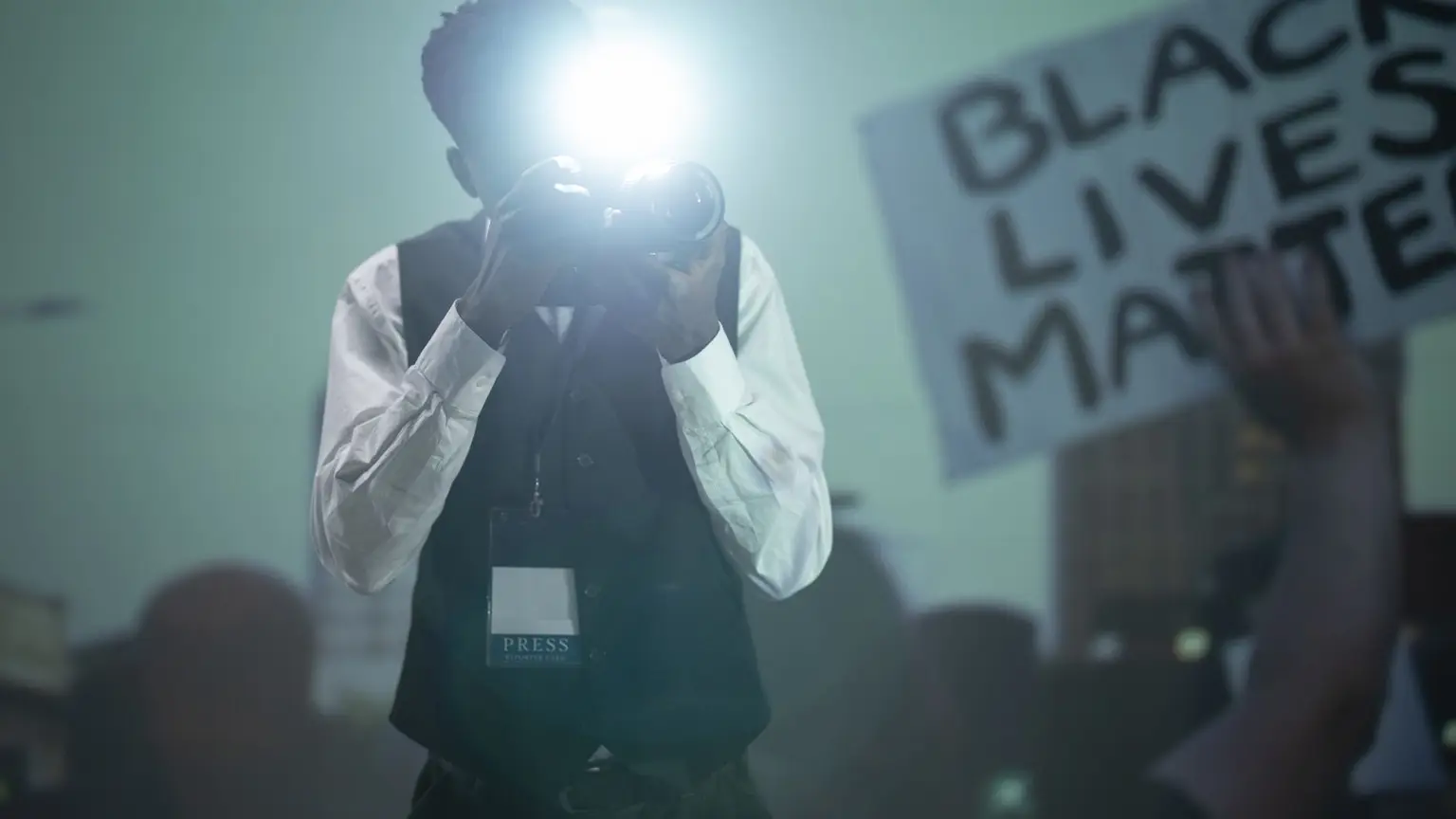
But the need remains. Someone has to show up at the city council meeting. Someone has to read the budget documents and ask why the water is contaminated and document the events that would otherwise vanish into the past.
The newspaper is dead. Journalism continues, transformed and dispersed and struggling to find sustainable forms. The question isn't whether it survives. It's what shape it takes, and who will have the resources to practice it.
The obituary was accurate. The succession is unclear. And somewhere right now someone is documenting something important, without credentials, without institutional backing, without a business model, because it matters and they can.
Long live journalism, whatever it becomes.
Enjoyed this?
An email when I publish something new. That is the whole list; I have never sent it for any other reason.
Get notified when I publish new articles. Unsubscribe anytime.