
Monero in 2026: Technical Advances Meet Regulatory Headwinds
Monero's cryptography keeps getting stronger while exchanges keep delisting it. Where that leaves an investor in 2026.
Lorenzo ScaturchioLos AngelesAbout the author
ExploreMoney & workTechnology & attention
The current landscape
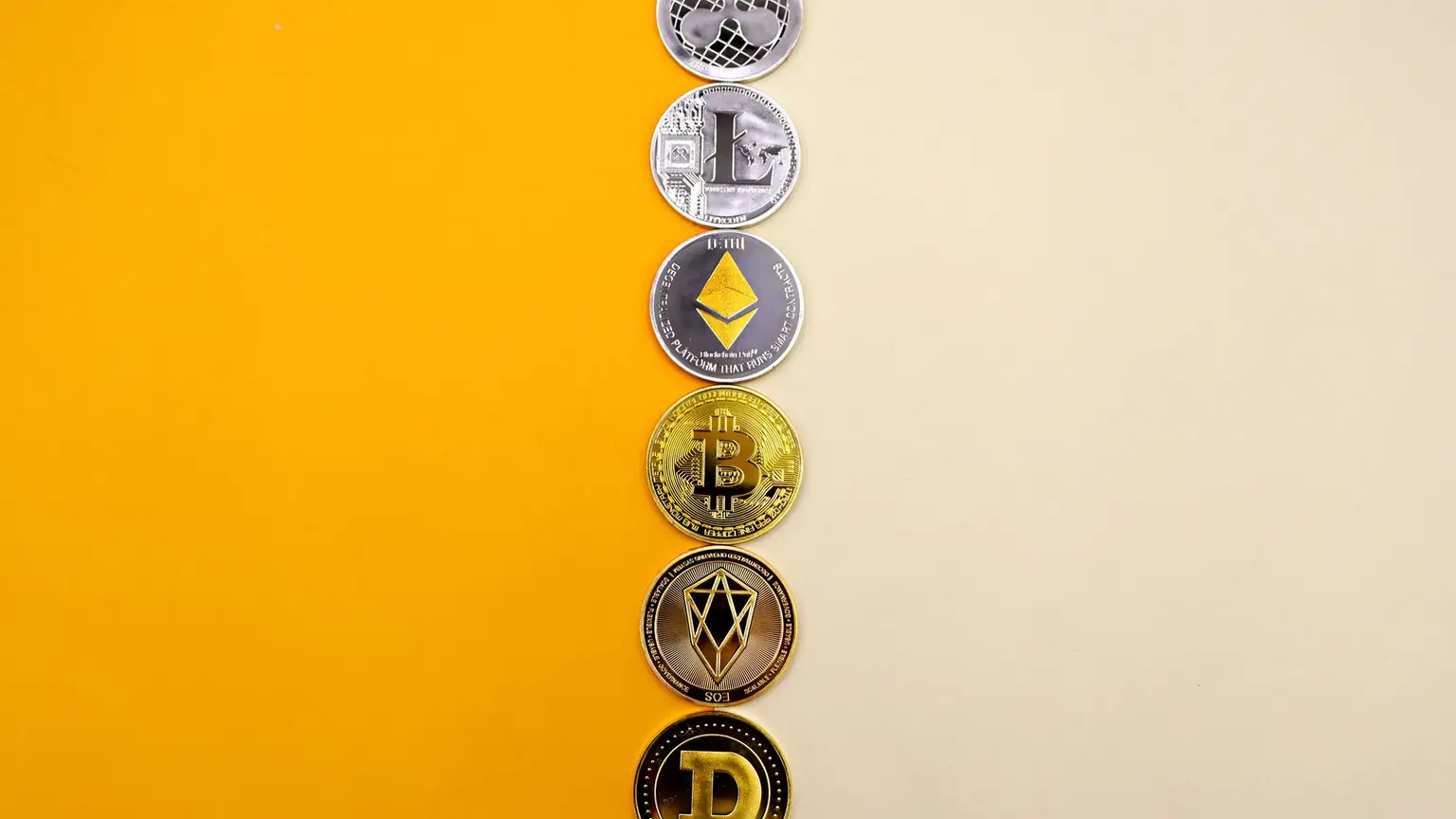
Monero faces a real question in 2026: can a privacy-focused cryptocurrency survive when regulation forces it off the exchanges and toward decentralized alternatives? The data suggests it isn't disappearing so much as being pushed into a niche, the privacy maximalists willing to use P2P exchanges, atomic swaps, and decentralized platforms like Haveno.
Key metrics as of early 2026:
- Market cap: ~$8.4-8.7 billion (ranking #14-22)
- Price: ~$458-472 (within 10% of all-time highs)
- Daily transactions: 23,400-28,400
- Daily trading volume: $88-127 million
- Businesses accepting XMR: 1,600+ (including NordVPN)
Holding within 10% of all-time highs through a wave of delistings tells you something about who's left. This is a base that values privacy over convenience, which doesn't behave like a speculation-driven asset.
Technical innovation: FCMP++ and beyond
The development picture is the strong part of the story. FCMP++ is Monero's most ambitious privacy upgrade since RingCT, expanding the anonymity set from 16 possible transaction sources to effectively the entire blockchain, over 100 million outputs. It closes a longstanding theoretical weakness where statistical analysis could narrow down where a transaction came from.
FCMP++ timeline:
- Veridise audit completed May 2025: no critical or high-severity vulnerabilities found
- Alpha testing concluded November 2025
- Mainnet deployment expected April 2026
The auditors singled out the "thorough documentation comments" from Monero's developers. As someone who ships software, I read that line twice; audits usually surface the opposite, and praise for the documentation is a tell that the people doing the work are careful.
Beyond FCMP++, the pipeline includes Seraphis and Jamtis (Q3 2026), which add tiered view-key access, letting a user expose transactions selectively for an audit while keeping default privacy intact. That could give institutional users a path to compliance, and it comes with new 196-character addresses and 16-word seed phrases replacing the current system. Bulletproofs++ projects a 30% reduction in transaction size, lowering fees further. The OSPEAD work keeps improving decoy selection.
No major hard fork has happened since August 2022's "Fluorine Fermi" upgrade. The team now considers the core protocol mature enough that biannual hard forks aren't necessary, though releases continue steadily; v0.18.4.4 shipped in November 2025 with spy-node protection improvements.
Regulatory tsunami
The regulatory environment has gotten much worse since 2024, and the changes are what anyone considering Monero has to understand first.
European Union
EU MiCA regulations became fully effective December 30, 2024. MiCA itself doesn't explicitly ban privacy coins, but companion EU AML rules prohibit crypto-asset accounts "allowing anonymization of transactions," and the Transfer of Funds Regulation requires full sender and recipient details for every crypto transfer with no minimum threshold. Together they make privacy coins incompatible with a licensed European exchange.
The EU AML deadline of July 2027 requires all custodial services to divest privacy coin holdings entirely. That isn't a forecast. It's law on the books with a date attached.
Exchange delistings
The practical impact has been severe:
- Binance: completed global XMR delisting February 2024, forcibly converting remaining balances to USDC by March 2025
- Kraken: halted EEA trading October 31, 2024, with automatic conversion to BTC after December 2024
- OKX: delisted XMR, ZEC, and Dash globally in January 2024
- No major exchange re-listed Monero during 2024-2025
The 73 delistings in 2024 are the highest annual count since 2021.
United States
The US looks different. No outright ban exists, but major exchanges avoid XMR on their own. Coinbase has never listed Monero; CEO Brian Armstrong cited "regulatory discomfort."
A leaked 2024 Chainalysis presentation claimed the firm provides "usable leads in approximately 65% of cases involving Monero" to law enforcement through IP harvesting rather than breaking cryptography. The Monero community disputes the figure, and the distinction is the whole point: an IP leak, a timing correlation, or a sloppy exchange interaction is a user mistake, not a crack in the math.
Other jurisdictions
- Japan and South Korea: near-total restrictions on exchange trading
- Australia: expanded VASP regulations effective March 2026 make listing privacy coins impractical
- Dubai: the Financial Services Authority prohibits privacy coins in licensed entities
Competition: the privacy coin landscape
The market has shifted under Monero's feet.
Zcash's institutional pivot
Zcash appreciated roughly 15x from September 2024 to November 2025, briefly passing Monero's market cap. That run coincided with Grayscale expanding its Zcash Trust holdings from 320,000 to 380,000 ZEC, shielded addresses climbing to 29-31% of circulating supply (up from 11% in early 2024), and the Zashi wallet making shielded transactions the default.
The thing that lets Zcash do all this is optional transparency. Because a user can send to a transparent address, Gemini and others restrict ZEC withdrawals to transparent addresses and keep the listing. The NU6 upgrade (November 2024) added new governance mechanisms, and Project Tachyon aims at billion-user scalability with recursive zero-knowledge proofs. Monero's privacy is mandatory, which is exactly why it can't make that trade.
Dash's compliance strategy
Dash has gone the other way, partnering with analytics firm Coinfirm to reconcile privacy with FATF Travel Rule requirements, positioning itself as a "compliant privacy option" for regulated environments. It launched a no-KYC debit card in December 2025 for real-world spending.
Layer-2 privacy solutions
Layer-2 privacy is the newer competitor to dedicated privacy chains. Railgun, endorsed by Vitalik Buterin (who moved $2.6 million through it in June 2025), uses "Private Proofs of Innocence" to block illicit funds without a backdoor and processes over $200 million monthly. Tornado Cash got its OFAC sanctions lifted in March 2025 after a Fifth Circuit ruling that the agency exceeded its authority, though prosecutions of its developers continue.
Academic research: what can actually be traced?
Recent academic work gives a careful read on what Monero's privacy actually guarantees.
TRM Labs study (August 2024)
"Monero Traceability Heuristics: Wallet Application Bugs and the Mordinal-P2Pool Perspective" documented traceability methods and concluded that several heuristics "have a high precision." The "10 Block Decoy Bug" and coinbase output identification heuristics did the most damage between 2019 and 2023, though the decoy bug was patched in early 2023.
March 2024 spam attack
A spam attack flooded the network with roughly 110,000 daily transactions, more than 80% of them from the attacker, at a cost under $650. It exposed infrastructure weaknesses and set off speculation about deanonymization attempts. The community has kept working on fee structures and network resilience since.
The pattern
The same shape keeps recurring. Monero's core cryptography stays unbroken; the traces come from operational security failures around it. The Finland prosecution of the Vastaamo hacker and the UK seizure of Monero from dark web drug sales used methods law enforcement has kept classified, and the people who study this believe those cases exploited user mistakes, not the protocol.
Community and development
Research and development
The Monero Research Lab is still active. Rucknium handles empirical analysis and the OSPEAD algorithm; jeffro256 works on the Carrot protocol, jberman on FCMP++ implementation, vtnerd on lightweight wallets. kayabaNerve led FCMP++ development but stepped back in November 2024, citing concerns about post-quantum security timelines, which is worth holding onto.
The Core Team disbanded in 2024 in favor of workgroups, a move toward more decentralized governance.
Community funding
The Community Crowdfunding System (CCS) keeps funding development despite the September 2023 hack that drained 2,675.73 XMR (~$460,000) from the main CCS wallet. The attack vector was never conclusively determined, and the General Fund covered shortfalls for ongoing proposals. Recent funded work includes 2,000+ XMR for kayabaNerve's FCMP development.
Community events
- MoneroKon 2024: held in Prague (June 7-9, 2024), sponsors including Cake Wallet, NYM, IVPN, and MAGIC Monero Fund
- MoneroKon 2025: confirmed for June 20-22, 2025, expecting ~400 participants
- Reddit community: 332,922 subscribers
- Revuo Monero Newsletter: 200+ weekly issues since 2022
Regional adoption shifts
Adoption has tilted toward privacy-conscious markets:
- South Korea: 41% increase in Monero-based transactions
- Africa: 37% year-over-year growth in privacy coin usage for remittances
- Latin America: 26% small business adoption in countries like Argentina and Venezuela
These regions share common characteristics: currency instability, capital controls, or surveillance concerns that make privacy a practical necessity rather than an ideological preference.
Risk assessment
Regulatory risk (critical)
The 73 delistings in 2024, the EU AML July 2027 deadline, and the effective bans in Japan, South Korea, and Australia are material. Earlier regulatory worries were sentiment; these are codified laws with enforcement behind them.
Liquidity risk (high)
Daily trading volume has contracted to $88-127 million, with Poloniex and Yobit now handling about 40% of privacy token volume, up from 18% in 2021. Thinner liquidity means sharper volatility and a harder time exiting a large position.
Centralization concerns (moderate)
In 2025 the mining pool Qubic briefly claimed 51% hashrate control, which dropped the price 7% and reopened the decentralization debate. Network hashrate fluctuates between 4.2-6.6 GH/s.
Technical risk (low-moderate)
FCMP++ has passed its audits, but any major protocol upgrade carries implementation risk, and kayabaNerve's step-back over post-quantum concerns points to debates inside the community that aren't settled.
Investment thesis: then and now
The thesis for Monero has changed shape. In 2024 it read as a privacy coin with strong fundamentals and regulatory uncertainty but continued exchange access. In 2026 it's a privacy-maximalist infrastructure bet. The value now rests less on whether you can buy XMR on an exchange and more on whether decentralized trading infrastructure (Haveno, atomic swaps, P2P markets) matures fast enough to replace what the exchanges took away.
The market has split. Zcash and the compliance-friendly options take the institutional and regulated segments, the places where you need to show your work to a regulator. Monero is left with the users for whom mandatory, default privacy is the whole point and any optional transparency defeats it.
Legitimate use cases
Privacy isn't inherently suspicious. The legitimate uses include financial privacy in surveillance states, protecting dissidents and journalists, confidential but legal business transactions, shielding personal wealth from criminals casing targets, and cross-border remittances that dodge predatory fees.
The 2025 seizure of the Archetyp dark web market ($250 million in XMR-only volume) shows both sides at once: the privacy works, and it works for people you'd rather it didn't. The technology is neutral. Users decide what it's for.
Conclusion
Monero faces a choice, not extinction. The technical fundamentals have strengthened; FCMP++ is real innovation that makes tracing substantially harder, the community is active, development continues, and the price has held through the delistings.
The access question is the one that won't resolve on a schedule. For Monero to thrive, decentralized infrastructure has to replace what the exchanges provided. Haveno and atomic swaps exist and are getting better. Whether they get better fast enough is the bet, and nobody can tell you the odds yet.
Where that leaves you depends on what you're buying it for. If you value privacy over convenience and you'll actually use DEX and P2P trading, Monero is still the strongest privacy option there is. If you need exchange liquidity or institutional compatibility, Zcash is the compliance-friendly alternative. If you're just speculating, the regulation makes this riskier than the technical story alone would suggest.
None of this is financial advice. Crypto carries a real risk of total loss, the regulatory environment is hostile to privacy coins, and you should understand your own tolerance before doing anything. The old disclaimer holds: not your keys, not your coins. With Monero, the second clause is harsher. Not on exchanges, and maybe no exit.
Enjoyed this?
An email when I publish something new. That is the whole list; I have never sent it for any other reason.
Get notified when I publish new articles. Unsubscribe anytime.