
The Commons Never Left
Common-pool resources exist everywhere. We just stopped seeing them. The tragedy of the commons is a myth that served enclosure.
Lorenzo ScaturchioLos AngelesAbout the author
ExploreMoney & work
A convenient myth
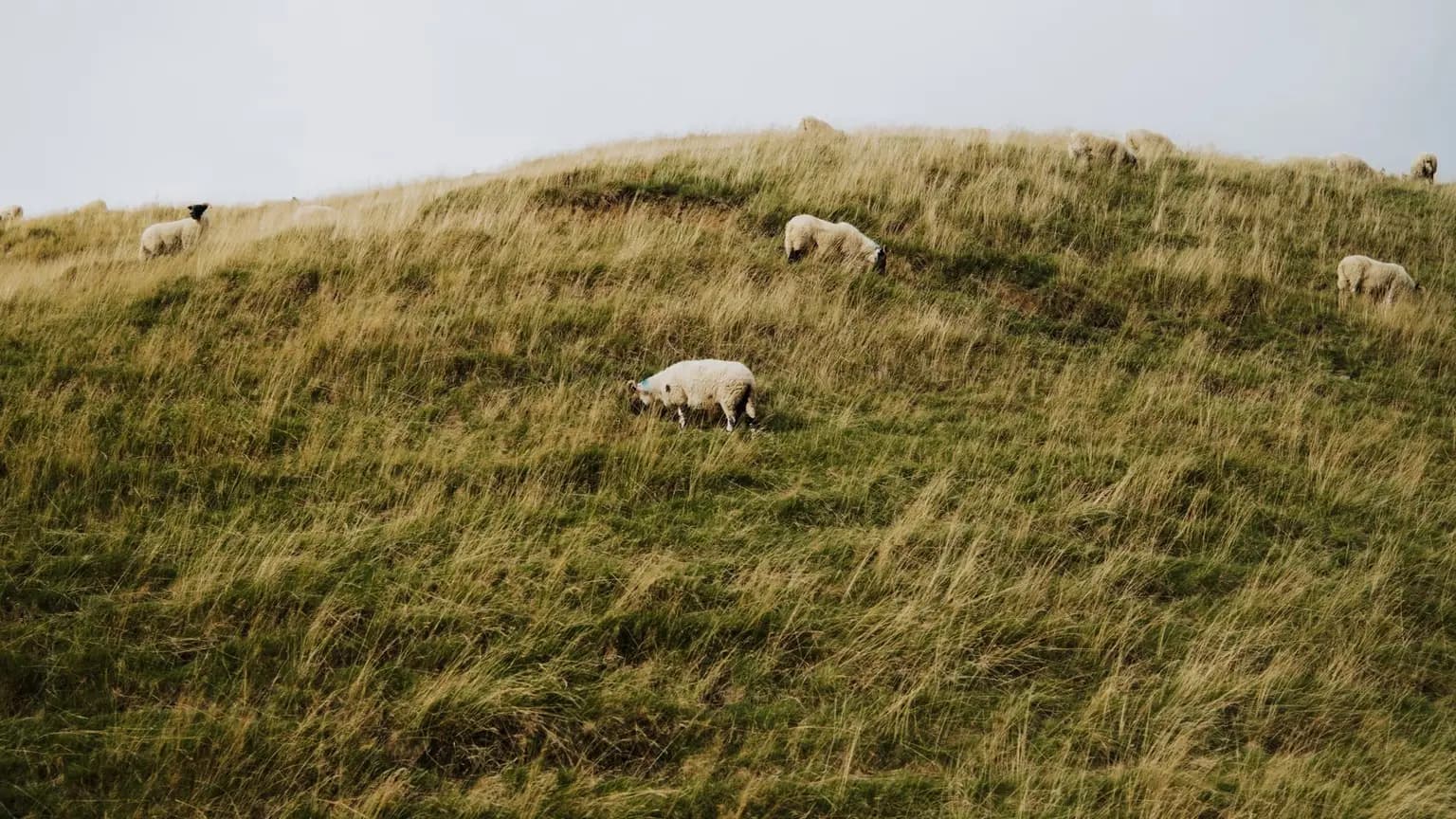
Everyone knows the tragedy of the commons. Shared pasture gets overgrazed because each herder gains from adding livestock while the cost spreads to everyone. Without private ownership or government regulation, the shared thing gets destroyed. Basic economics.
Except it isn't true, and it never was.
The argument comes from Garrett Hardin's 1968 essay in Science, and it wasn't based on any actual commons. Hardin described an imaginary pasture with imaginary herders who had no relationships, no communication, no rules, no way to punish a cheat — a situation that has never existed anywhere. Decades later Hardin himself conceded the title should have been "The Tragedy of the Unmanaged Commons." The correction never caught up with the slogan.
Real commons have governance. They always have. The reason some of them lasted centuries, a few of them millennia, is that the communities running them built careful systems for doing so. What the "tragedy" describes is what happens when those systems break down or get torn out on purpose — the absence of a commons, not the thing itself.
What commons actually were
Before enclosure, the centuries-long process of turning common land into private property, most of the world's productive land was held through some form of collective governance. Forests, fisheries, pastures, waterways, game. Not open-access free-for-alls. Regulated commons.
The rules varied enormously. Some were formal, written into law; others were customary, enforced through social pressure and community sanction. The skeleton underneath was consistent, though — consistent enough that Elinor Ostrom could catalogue it. Governing the Commons (1990) distilled decades of fieldwork into a set of design principles that successful commons share: defined boundaries, clear membership, rules fitted to local conditions, ways to watch for violations, graduated penalties, cheap ways to settle disputes. The work won her the 2009 Nobel in economics, the first ever awarded to a woman, for the unglamorous finding that Hardin's herders don't exist.
Her case studies weren't speculative. Swiss alpine villages like Törbel have run common pastures under written rules since 1483. Valencia's Tribunal de las Aguas has been settling irrigation disputes in the same spot outside the cathedral for about a thousand years. The patterns repeat on every continent, in cultures that never touched.
Commons work when they're actually commons, meaning when the community has the authority and the capacity to govern them. They fail when that governance gets pulled out from under them, by state seizure, by privatization, by outside pressure that makes local management impossible.
Enclosure wasn't progress
The standard story treats enclosure as an unfortunate but necessary step toward modernity. Common land was inefficient, private ownership let owners invest and improve, and the peasants it displaced became industrial workers, which the long run rewarded. Everyone wins, eventually.
That story was written by the people who profited from it.
What happened was theft on an enormous scale — E. P. Thompson called the English version "a plain enough case of class robbery" in The Making of the English Working Class (1963). Parliament passed thousands of enclosure acts between 1750 and 1850, converting some seven million acres of common land into private property through procedures the commoners had no standing to contest. An anonymous 18th-century rhyme kept the score: The law locks up the man or woman / Who steals the goose from off the common / But leaves the greater villain loose / Who steals the common from the goose. The people who had depended on that land lost their living and were pushed into wage labor or destitution.
The efficiency gains were real for the new owners. Enclosure was extremely good at concentrating wealth and manufacturing a class with nothing to sell but their labor. Whether that counts as progress depends entirely on where you're standing. And the claim that commons were inefficient in the first place is just false: many were productive precisely because they were managed for the long term, while the "improvements" enclosure enabled often meant mining the soil for a few profitable generations and walking away.
The commons that remain
Despite centuries of enclosure, commons persist. They're everywhere, once you know how to see them.
Community forests in South Asia and Latin America manage millions of hectares through collective governance. Irrigation systems in dry regions coordinate water across thousands of farms. Fishing communities hold harvests sustainable through traditional rules that scientists are only starting to understand.
You don't have to look at traditional societies, though. I build software for a living, and most of the internet's infrastructure runs on open source software that nobody owns. Wikipedia holds more than any privately-produced encyclopedia ever did. Linux is underneath everything from web servers to the phone in your pocket. The protocols that make the internet work were built cooperatively and are still governed collectively. The most successful information resources in human history are commons, and they were built without a single owner.
Urban commons are just as present, if less celebrated. Community gardens. Parks kept up by neighborhood associations. Tool libraries. Community land trusts. Two neighbors sharing a ladder, or watching each other's kids, is a micro-commons running quietly beneath the formal economy.
Why we stopped seeing them
Economic theory leans so heavily on private property that commons become hard to see at all. If your framework only has two boxes, individual ownership and state ownership, everything that doesn't fit one gets shoved into the other.
So commons get filed as government property, though the state doesn't own them. Or as primitive arrangements waiting to be modernized, though many are more sophisticated than what replaces them. Or as market failures in need of correction, though they're not failing at anything; they just work on different terms.
The mislabeling isn't accidental. Recognizing commons raises questions the enclosure mindset would rather not face. If communities can manage resources without privatization, why do we keep privatizing? If open information goods outperform proprietary ones, why do we keep extending copyright? The honest answer is that enclosure pays, and pays the people with the power to decide what gets called real. So the commons get erased, or redefined, or waved off as exceptions that somehow prove the rule.
The new enclosures
Enclosure isn't history. It's happening now.
Water resources sold off. Seeds and genetic sequences patented. The data your daily life generates turned into a product you don't get paid for. Public universities run as profit centers. Urban space fenced through exclusionary zoning and benches you can't lie down on. And, maybe most consequential, the slow enclosure of the digital commons through surveillance capitalism, platform monopoly, and the quiet death of the interoperability that once made the internet open.
Every wave runs the same play. Something communities built and managed together gets captured by private interests promising efficiency. The gains concentrate. The losses spread out. And within a generation, people forget there was ever another way to do it.
That's why the history matters — as evidence that enclosure was a choice, never as nostalgia for a golden age that wasn't golden. The commons were destroyed because they competed with private accumulation and lost the fight, not the argument.
Reclaiming and defending
Commons don't maintain themselves. They have to be defended against enclosure, and where they've been lost, built again from nothing.
Defense means resisting privatization: blocking the sale of public assets, pushing back when intellectual property reaches into a new domain, keeping alive the open standards and protocols that let digital commons function at all.
Defense alone won't do it, though. New commons need social infrastructure underneath them, the unglamorous parts: rules for use, ways to monitor, a process for handling conflict, and the trust between people without which none of the rest holds together. That last one takes the longest to build and is the easiest to break.
People are doing this work. Urban land trusts are pulling housing out of speculative markets. Community-owned renewable projects are getting bigger. Platform cooperatives are offering an exit from the extractive gig companies. Indigenous communities are reasserting governance over land that was theirs first. None of it is easy, and the forces of enclosure have far more money and a legal system tuned to protect property rights far more carefully than common ones.
Beyond the binary
Standard political talk offers two options: private property or state control, markets or government. That's a thin menu.
Commons are neither. They're a third thing, collective ownership and governance run through community institutions rather than through markets or through bureaucracy. Once you can see the third option, the set of available answers to any given problem gets wider.
Not everything should be a commons. Some things really do work better as private property; some need the state. But refusing to put commons on the menu at all narrows the menu for no good reason except habit.
The real tragedy is pedagogical: two generations learned Hardin's parable as settled science and never heard about the water court that has met outside the Valencia cathedral, every Thursday at noon, since before the parable's pasture was even a metaphor. The commons never left. We were taught to stop looking.
Enjoyed this?
An email when I publish something new. That is the whole list; I have never sent it for any other reason.
Get notified when I publish new articles. Unsubscribe anytime.