
Bioregionalism: Thinking Like a Watershed
Political boundaries are arbitrary. Ecological ones aren't. What organizing politics around natural systems actually means.
Lorenzo ScaturchioLos AngelesAbout the author →
ExplorePower & institutions
Arbitrary lines
Look at a political map of the United States. See those straight lines slicing through the Great Plains, carving up the Mountain West, dividing the desert Southwest into neat rectangles?
Those lines mean nothing. They don't follow rivers or mountain ranges or watersheds or any natural feature whatsoever. They're artifacts of land surveys and political compromises, drawn by people in distant rooms who ran rulers across maps of territory they'd never seen.
And yet these lines determine who governs what water. They set environmental regulations, agricultural policy, the rules for who gets to extract what. They carve out jurisdictions that bear no relationship to the ecological systems they supposedly manage. A boundary that ignores the land still gets to make every decision about it.
What bioregionalism means
Bioregionalism proposes a simple idea: political boundaries should follow ecological ones. Instead of organizing governance around survey coordinates, you organize it around watersheds and natural regions, and let the lines on the map reflect how the landscape actually works.
That's not an aesthetic preference. It's a practical argument about managing natural systems, and it starts from a fact nobody disputes. Water doesn't respect state lines. A river basin is a single integrated system; what happens upstream arrives downstream whether the downstream people voted for it or not. Divide that basin among jurisdictions with different laws and different priorities and coordinated management becomes nearly impossible.
The same holds for forests, fisheries, air quality, and most of the systems humans depend on. Nature doesn't care about political boundaries. Neither should the institutions that claim to manage it.
Thinking like a watershed
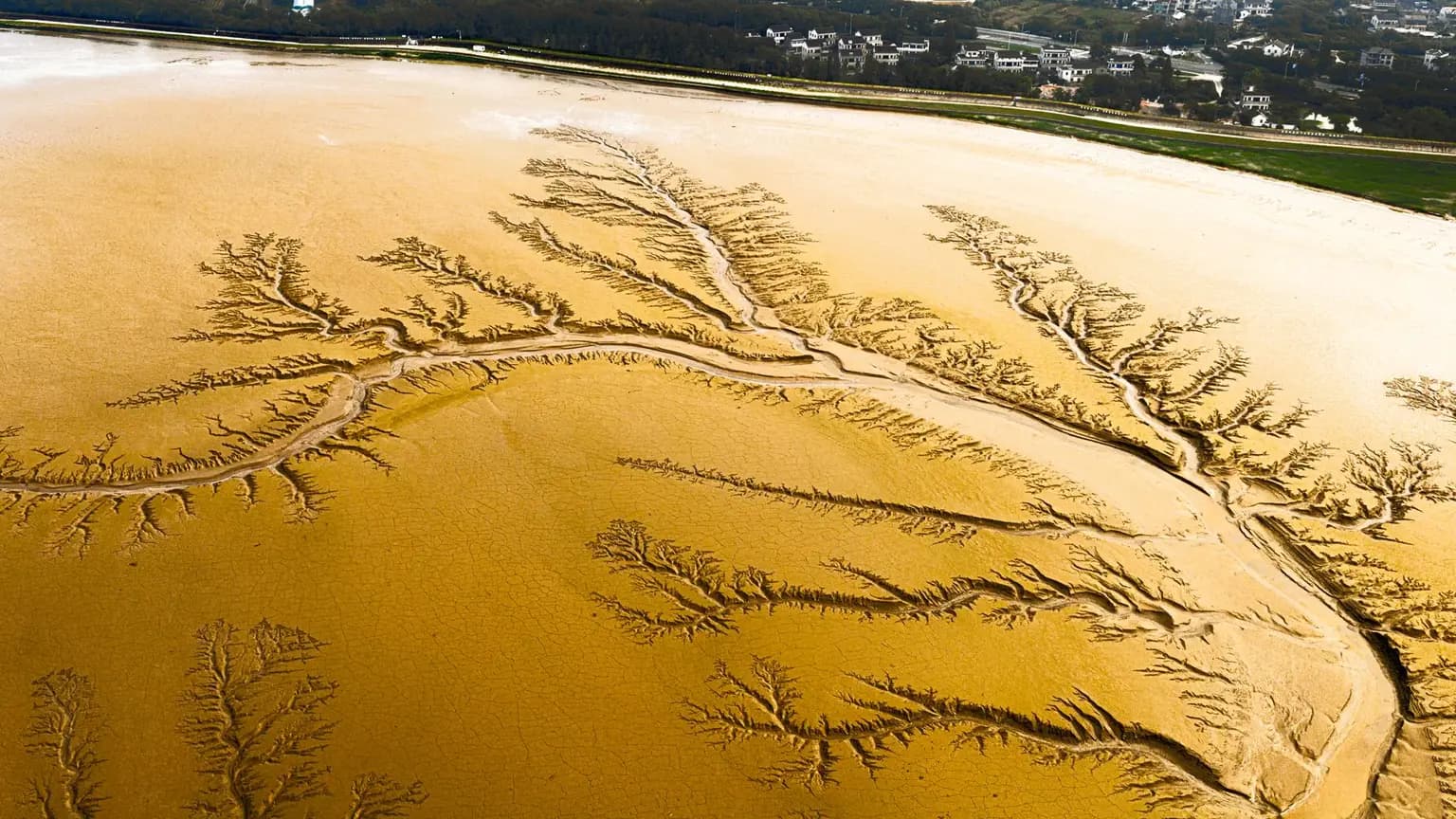
A watershed is everything that drains into a particular body of water. It's defined by topography, by where rainfall flows. Every point on land sits inside some watershed, connected by gravity and hydrology to whatever lies below it.
That connection is the whole point. Pollution upstream becomes contamination downstream. Deforestation in the headwaters means flooding and erosion below. Pump groundwater here and an aquifer drops somewhere you've never been. Thinking like a watershed means holding all of that at once — seeing the landscape as one system instead of a collection of parcels, and recognizing that an action has consequences past the edge of the property line.
This is obvious to anyone who works with land and water. Farmers know it, fishers know it, and Indigenous peoples organized their territories around it long before colonial surveyors arrived with their rulers. Only modern political systems pretend the lines on the map are more real than the landscapes underneath them.
The political argument
The case for bioregionalism is finally about democracy, not ecology. When political boundaries don't match ecological ones, the people who bear the consequences of a decision often have no say in it. The harm crosses a jurisdiction the voters can't reach.
Consider a river flowing through several states. What upstream states decide about pollution limits and water withdrawals determines what downstream states receive, and downstream residents have no representation in upstream governments. They live with decisions they can't influence. That happens constantly, invisibly, everywhere a political boundary crosses an ecological one.
Bioregional governance would align democratic authority with ecological impact. The people affected by what happens to a watershed would be the people deciding it. Representation would match where the water goes.
The practical challenges
Redrawing political boundaries is hard, obviously. States aren't going to dissolve themselves, and no county is going to merge with its neighbor because an ecologist drew a prettier map. The existing system has enormous inertia.
But bioregionalism doesn't require abolishing the jurisdictions we have, though that would be nice. It can work through coordination and through new governing bodies layered over the old ones. This already happens, badly. Interstate compacts manage some river basins. Regional authorities coordinate across state lines on water and air. These arrangements tend to be too weak, too underfunded, and too easy for any one member to ignore when it's inconvenient. What they prove is that trans-boundary governance is possible at all. Whether it's ever made strong enough to bind is a different question, and mostly a political one.
Place-based identity
Bioregionalism also asks for a different sense of belonging. Instead of identifying with a political unit — a state, a nation — you'd identify with the place you actually inhabit. Know your watershed. Know what mountains define your horizon, what shares the ecosystem with you, where your water comes from and where your waste goes after it leaves the drain.
That kind of knowledge was ordinary for most of human history, because survival ran on it. People understood the seasonal patterns and the carrying capacity of the ground they stood on because getting it wrong meant going hungry. Modern life severed the connection. Most people couldn't name the watershed they live in or say which direction their water flows, let alone what grew on their block before it was paved.
Bioregionalism asks us to rebuild that knowledge — not as nostalgia for a simpler past, but as the practical baseline for living somewhere without wrecking it.
Beyond nation-states
The same critique extends past internal boundaries to the nation-state itself. Nations are historical accidents too. Their borders came out of wars, treaties, and colonial impositions, and they have no more ecological validity than the straight lines crossing the American West.
But a nation claims absolute sovereignty over its slice of any shared ecosystem, and international environmental agreements are voluntary and weakly enforced. So transboundary ecosystems get destroyed because no one has the authority to protect them, and emissions keep climbing because no institution can compel a country to stop. Oceans, atmosphere, migrating birds — they fall through the cracks of a governance system built for territory that holds still.
Effective environmental governance needs institutions scaled to the systems they manage. A river basin needs an authority the size of the basin; the climate needs something bigger than any one country, which is exactly the thing we've never managed to build. The nation-state is the wrong unit for almost every ecological problem, and it's also the only unit currently holding any real power.
The vision
Picture a world where the people managing a forest are the people who live in it, and decisions about a river are made by everyone the river runs through. That world still has conflict. People would argue about land use and extraction and what counts as protection. But the arguments would be among people with a shared stake in a shared place, instead of between a distant authority and a landscape it's never seen.
Bioregionalism isn't a utopia. It won't end those fights. It's a different way of drawing lines on maps, one that answers to where the water goes rather than to a surveyor's ruler.
I build systems for a living, and the failure mode here is familiar: a structure whose boundaries don't match the thing it's supposed to handle will keep producing the same failures no matter how hard anyone works inside it. The current arrangement is failing on every axis you'd measure — species disappearing, decisions made by people accountable to no one downstream, governance that can't reach the scale of its own problems. Redrawing the lines wouldn't fix that overnight, and the inertia is real enough that it may never happen at all.
But the lines are just lines. The river was here first, and it will outlast every boundary we've drawn across it.
Enjoyed this?
An email when I publish something new. That is the whole list; I have never sent it for any other reason.
Get notified when I publish new articles. Unsubscribe anytime.