
Against Productivity Time
Clock-discipline is a three-hundred-year-old invention that we now mistake for a law of nature.
Lorenzo ScaturchioLos AngelesAbout the author →
ExploreMoney & workPhilosophy & the self
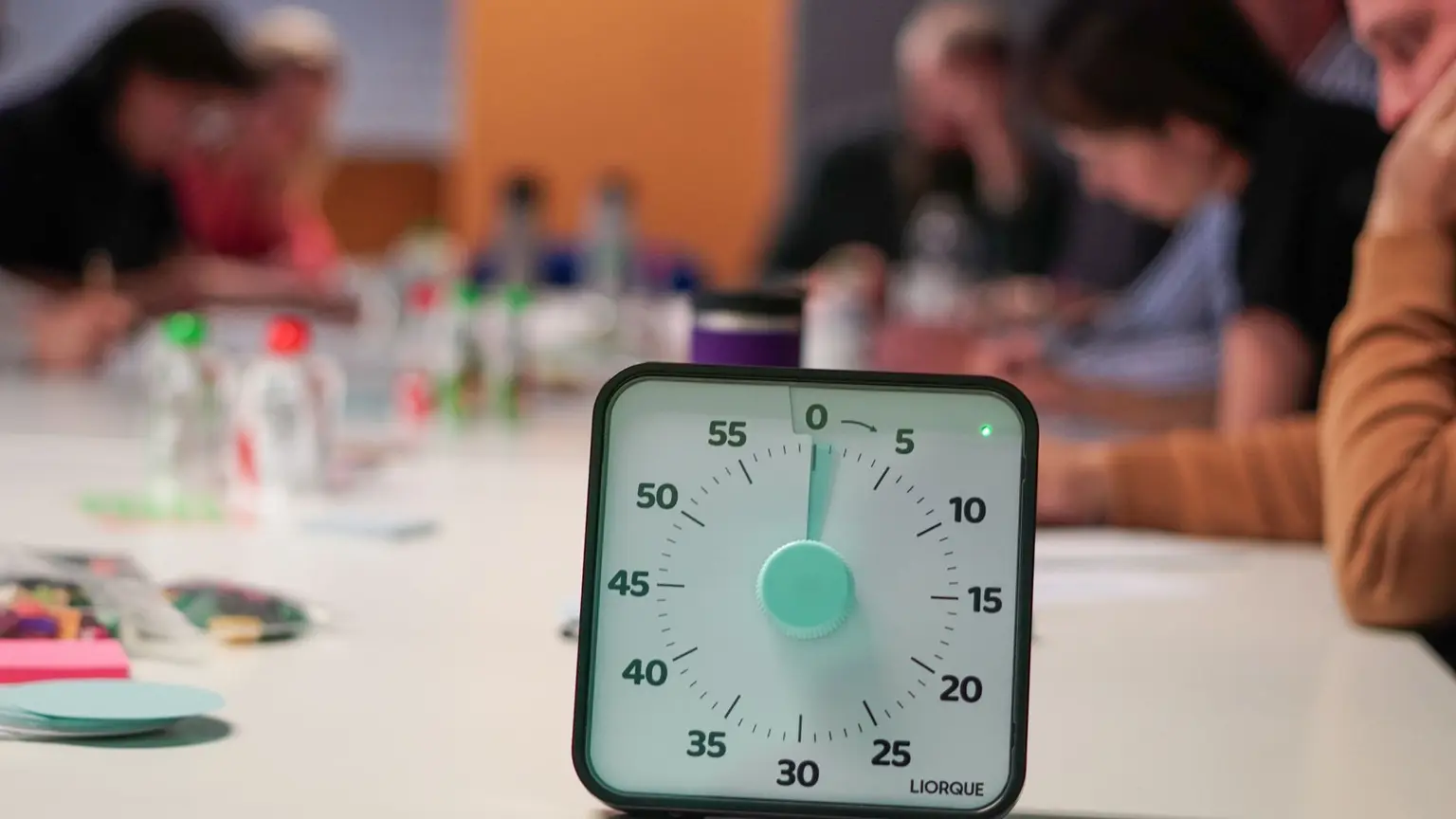
The clock is a weapon
The way you think about time — hours, minutes, schedules, deadlines — is about three hundred years old. For most of human existence, people didn't slice their days into identical units to be filled with productive labor. They couldn't have. The technology to measure it that finely didn't exist, and neither did the reason to want to.
Clock-discipline is an invention, and like most inventions it was built to serve specific interests.
How we got here
Before the factory, work happened when work needed to happen. Farmers worked by seasons and daylight, craftsmen until the task was done. There was no clocking in, no timesheets, no anxiety about "wasting" an afternoon, because an afternoon wasn't yet a standardized container waiting to be filled.
Industrial capitalism changed the shape of the day. Factories needed workers to show up at the same moment, because machines ran on schedules. Time became money in a literal sense: an hour of labor could be bought and sold, and workers who arrived late were docked pay. The clock became a tool of discipline.
Then we internalized it.
The tyranny nobody questions
Modern productivity culture takes clock-discipline and cranks it past anything a factory owner would have recognized. Every minute optimized, every hour accounted for. We track our time in apps and feel guilty about unproductive weekends. Somewhere along the way we convinced ourselves that our worth correlates with how efficiently we convert hours into output.
Think about what you're actually doing when you schedule your whole day in fifteen-minute blocks. You're treating yourself like a factory and appointing yourself foreman. The surveillance that workers once fought and died to resist, we now install on ourselves and pay a subscription for the privilege.
What gets lost
Clock-time flattens everything. An hour is an hour is an hour. Except anyone who has actually lived knows it isn't: some hours stretch, others vanish, and an afternoon of real conversation doesn't register the same as an afternoon of meetings. The schedule can't see that difference, and doesn't try to.
So we lose the ability to be in time rather than watch it pass. When you're checking how long something is taking, you're not fully in the doing of it; your attention has split between the activity and its measurement. The clock pulls you out of the experience it's supposed to be tracking.
For factory work, maybe that's fine. For creative work it's ruinous, and for rest it's worse.
Other ways exist
Pre-industrial societies organized time around tasks, events, and natural rhythms. Work expanded and contracted with what needed doing. There were busy stretches and slack ones, harvest against winter, and the day had a shape given by sunlight rather than by arbitrary divisions. Time wasn't a scarce resource to be hoarded; it was the medium you lived in.
Even inside industrial societies you can find pockets of resistance. Artists who work when the work comes. Parents who build the day around what a child actually needs. People who've quietly dropped the productivity gospel and found that things still get done, sometimes better.
The productivity paradox
Obsessive time-optimization often makes you less effective rather than more. A packed schedule fragments attention through constant context-switching, and the pressure to fill every moment kills the unfocused wandering where insight tends to show up. Creativity runs on slack, which is exactly what the optimization removes.
You end up with people who are busy all the time and rarely finish anything that matters. They're optimizing the wrong variable. Filling time and doing good work are not the same operation.
The work I'm proudest of tends to arrive in flow states where time-awareness disappears, and you can't schedule flow. You can only set up conditions for it, and those conditions usually look like the opposite of what productivity culture asks for: slow down, leave gaps, tolerate not knowing how long it'll take.
Who benefits?
When something seems irrational but persists anyway, ask who benefits. Clock-discipline benefits employers who buy labor by the hour, and software companies selling the apps that help you account for it, and an economy that would rather you keep consuming productivity content than stop to ask whether any of this makes sense.
It doesn't really benefit you. The feeling of being perpetually behind, never doing enough, racing against a clock that keeps winning, isn't a personal failing. It's the intended experience. You're supposed to feel that way; it's what keeps you on the treadmill.
Toward a different relationship
I'm not arguing for laziness, and schedules aren't useless. Some coordination needs a shared time-reference. Meetings have to land somewhere, and deadlines exist for reasons.
But using a clock as a tool is not the same as being ruled by one. You can schedule the coordination that genuinely needs scheduling without treating every unclaimed hour as a problem to solve. What would it look like to organize a life around tasks instead of slots — to let things take as long as they take, to live by rhythms instead of timetables? People will answer that differently, and that's the point. There's no single alternative system to install. There's only the recognition that the current one was built, which means it can be questioned and parts of it refused.
The real question
The productivity cult treats time as a resource to optimize, which quietly assumes an answer to the question underneath: what is time for?
If it's for producing economic value, then squeezing more output per input is the whole game. But maybe it's for experience, for the people you care about, for whatever you find meaningful — which might include the work, and almost certainly includes more than the work. Under that view the goal stops being to fill time efficiently and becomes to be in it. To have a life and not just a schedule. To do nothing in particular on a Tuesday and not flinch.
The clock keeps ticking either way. The only open question is which direction the labor runs.
Enjoyed this?
An email when I publish something new. That is the whole list; I have never sent it for any other reason.
Get notified when I publish new articles. Unsubscribe anytime.