
Abolition Isn't What You Think
Abolition is not the absence of safety but the presence of something better than cages.
Lorenzo ScaturchioLos AngelesAbout the author
ExplorePower & institutionsPhilosophy & the self
The straw man
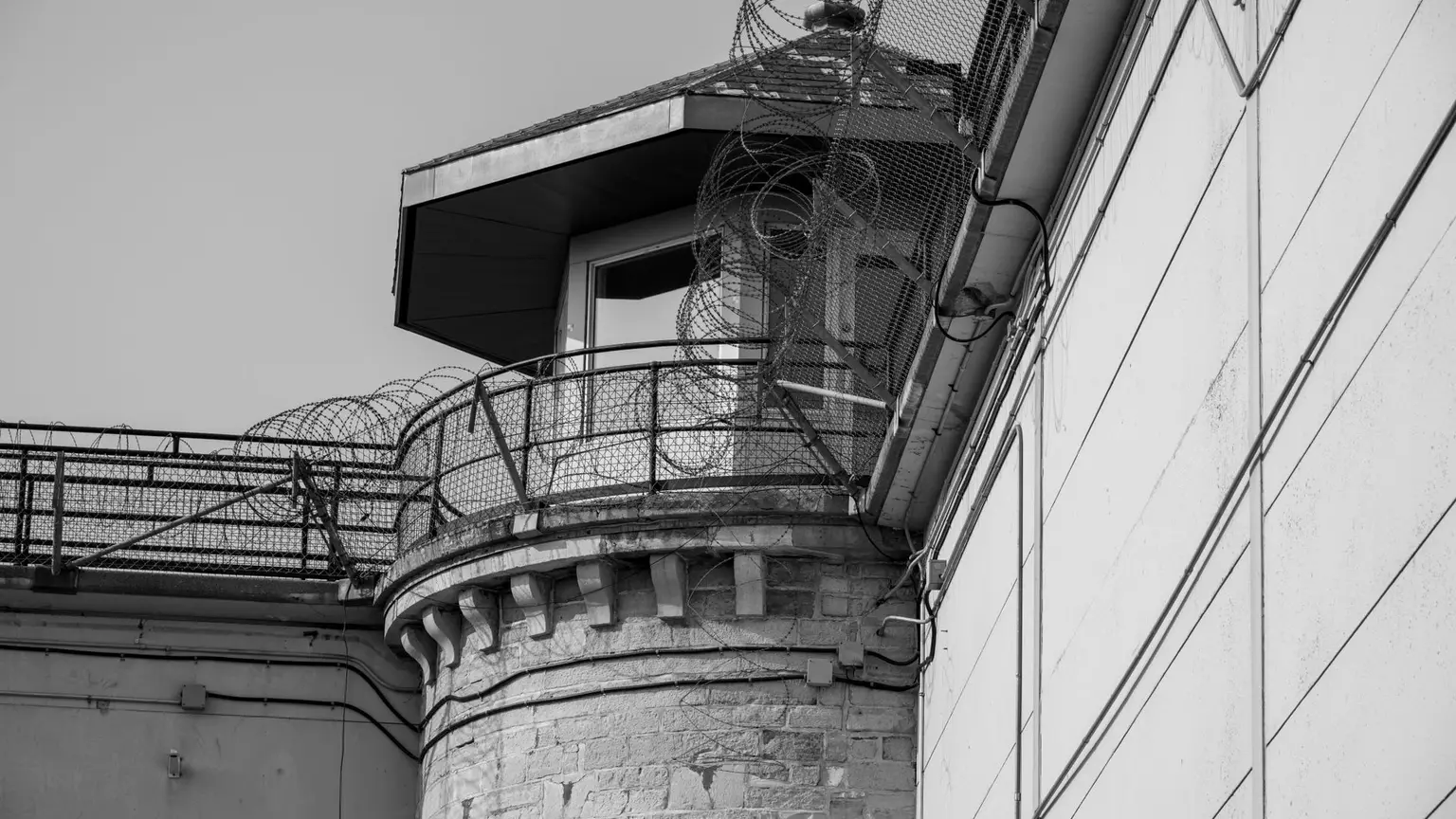
Say the word abolition in most rooms and watch what happens. People picture a switch being flipped. Police vanish, prisons empty overnight, chaos descends. Someone brings up murderers, as if abolitionists had somehow never noticed that violent people exist.
That reaction tells you very little about abolition and a lot about who controls the framing. The conversation starts from the same premise every time: what do we remove? What disappears?
Abolition doesn't start there.
The actual question
Mariame Kaba, one of the central organizers in the abolition movement, puts it plainly in We Do This 'Til We Free Us. Abolition is not about tearing down. It's about building. The question isn't "what do we do without prisons" but "what do we build so that prisons become obsolete?"
That turn changes the terms. You're no longer defending the absence of a system; you're proposing the presence of a better one. What causes harm, what prevents it, and is the thing we're currently doing on either list?
Ruth Wilson Gilmore, the geographer whose work on the prison-industrial complex shaped a generation of organizers, defines racism as "the state-sanctioned or extralegal production and exploitation of group-differentiated vulnerability to premature death." It's a mouthful. Sit with it anyway. If the system we've built produces premature death along racial lines, and the data overwhelmingly says it does, then the system isn't malfunctioning. It's working as designed, and reforming the margins won't touch the blueprint.
What's actually being proposed
Abstract arguments are easy to wave off, so here are the concrete ones.
CURE Violence (now the Global Network on Community Safety) treats violence like an epidemic, because the epidemiological data supports treating it that way. They deploy "violence interrupters," people with standing in affected communities, to mediate conflicts before they turn lethal. Independent researchers have evaluated the model repeatedly. In implementation sites, shootings have dropped 40% to 70%. No new policing, no tougher sentencing. Community members intervening in the dynamics that produce violence.
A study by Sara Heller in the Journal of Urban Economics evaluated a Chicago youth jobs program and found participants had a 43% reduction in violent-crime arrests during the program period. Give young people something to do and a legitimate income, and you cut violence more than any policing strategy in the city's history did.
Restorative justice programs in schools put students who cause harm into structured dialogue with the people they harmed, instead of suspension or expulsion. Districts across the country have cut suspensions by more than half. Oakland Unified saw an 87% reduction in expulsions after adopting the practice. This isn't kids getting away with it. It's accountability that changes behavior rather than just clearing the building.
None of these are thought experiments. They're operating programs with published evaluations.
The failure we accept
The status quo doesn't work either. We just decline to hold it to the same standard of proof.
The United States incarcerates more people per capita than any other country on earth, roughly 1.9 million on any given day. The mass-incarceration experiment is fifty years old now. Recidivism runs around 44% within the first year of release and roughly 77% within five years, per Bureau of Justice Statistics data.
Sit with the arithmetic. We spend over $80 billion a year on a system where more than three-quarters of the people it processes are back inside within five years. A public program with a 77% failure rate in any other domain would be defunded by Tuesday. Prisons get a pass because they satisfy something unrelated to outcomes, which is the desire to see someone punished.
Abolitionists aren't arguing against safety. They're arguing against an $80-billion-a-year system that fails to produce it.
The reform trap
The usual response: maybe prisons aren't great, but let's reform them. Better training, body cameras, oversight boards, nicer facilities.
The history of reform is the history of absorption. Body cameras didn't reduce police violence; officers learned to switch them off, or departments learned not to release the footage. Civilian oversight boards got defunded, understaffed, or denied subpoena power. Training came and went. The underlying dynamics held.
Gilmore names the split: reformist reform versus abolitionist reform. The first tinkers with the machine without asking whether the machine should exist. The second builds alternatives that make the machine unnecessary. One keeps feeding a failing system; the other moves the resources toward things that work.
The annual cost of incarcerating one person in New York State runs over $300,000. For that, per person, per year, you could fund a full-time job, housing, mental-health treatment, and substance-abuse counseling, all of which lower the odds of future harm. We chose the cage. Not because it's cheaper or more effective, but because it reads as justice to people who were taught that justice means punishment.
Violence is not random
The abolition argument rests on something the current system ignores. Violence isn't random. It's concentrated and predictable, produced by identifiable conditions: poverty, housing instability, untreated mental illness, substance abuse, no economic opportunity, prior exposure to violence.
This isn't a soft claim. It's an epidemiological one. Gary Slutkin, the physician who founded CURE Violence, spent a decade fighting infectious-disease outbreaks in Africa before he came back to Chicago and saw the same transmission patterns in gun violence. Violence clusters. It moves through social networks. It follows exposure. You fight an epidemic by interrupting transmission and treating the underlying conditions, not by quarantining people after the fact.
Policing and incarceration are almost entirely reactive. They show up after the harm has happened and do little to keep it from happening at all. The abolition framework asks the question a step earlier: what conditions produce the harm, and how do we change them?
What we're really afraid of
The resistance to abolition is less about safety than about punishment. We've been conditioned to believe that justice means suffering, that someone who causes harm has to experience pain in return, and against that reflex any alternative reads as a moral violation.
Punitive justice doesn't heal the person who was harmed, doesn't touch the conditions that produced the harm, and doesn't make the community safer. It meets an emotional need for retribution and calls the satisfaction justice.
Kaba again: "No one enters violence for the first time by committing it." The people who cause harm have, overwhelmingly, survived it first. That explains nothing away. But a response to harm that ignores its causes isn't solving a problem. It's performing a ritual.
The build
Abolition is a construction project. More housing, mental-health services, addiction treatment, youth programs, living-wage jobs, community-based conflict resolution, and real investment in the places we've spent decades disinvesting from.
It isn't naive, and it isn't easy. It's expensive, complicated, and slow. So is the current system, which costs $80 billion a year and makes the problem worse while the alternatives cost less and make it better.
You don't have to be convinced overnight. You just have to stop accepting the premise that the only possible answer to harm is a cage. Look at the recidivism rates, the cost-effectiveness studies, the intervention evaluations, and the cage starts to look less like a solution than like a habit. An expensive one we can't afford to keep.
Enjoyed this?
An email when I publish something new. That is the whole list; I have never sent it for any other reason.
Get notified when I publish new articles. Unsubscribe anytime.